Typ
LORA
Veröffentlichungsdatum
2023-03-20
Basismodelle
SD 1.5
Auslösewörter
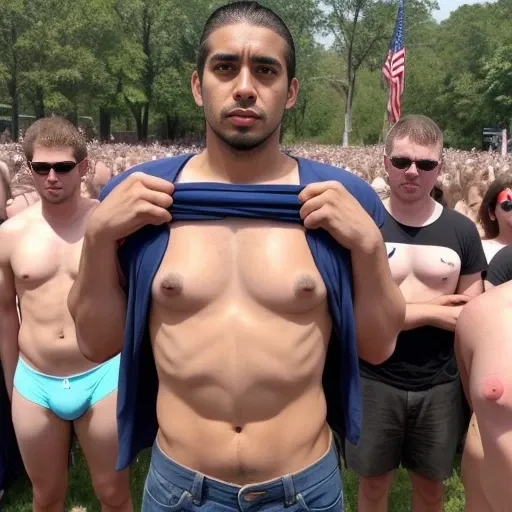
shirtlift
Kopieren
Versionsvorstellung
Trained on SD1.5, 104 images, Network Dim 64, 10 Epochs, 2 Repeats.


SEQUEL OUT NOW: Skirtlift
I was having a hard time prompting a woman lifting her shirt, so I made this LORA. It also works for men.
Sample images made with the model Liberty.
EDIT: some people asked how I made it. Here's a rough guide:
Workflow:
1. Scour the interweb for pictures that represent the theme (women pulling their shirts up). Try to get a range of bodytypes/outfits/locations (while keeping in mind that they need to still have enough of a consistent theme for the AI pick up on what's being trained)
2. Crop and tag images. It's better to crop manually, especially with smaller datasets, but I had over 100 images so I automated it and just deleted the bad crops. (Many tools available for this. I think I used the Smart Process extension for Automatic1111).
2a. Cut the tags that represent the theme ('flashing,' 'pulling back shirt,' etc.), replace with a universal tag ('shirtlift')
2b. Fix incorrect tags
3. Run a first LORA training (I used the Kohya LoRA Fine-Tuning Notebook by Linaqruf).
4. Test it with an uncomplicated prompt and see what's not working:
4a. Is it not grasping the theme? Cut images that are too much of a variation on the theme (here it was mostly shots where the shirt was too bunched up to for the AI to 'read' it as a shirt, and shots where other things were going on with the person's hands)
4b. Is it reproducing aspects that aren't essential to the theme? Cut some of the images that over-represent those aspects in the dataset and/or describe those aspects in the caption since the AI might be assuming they're part of the universal tag. (Here it was forcing some of the same features or bodytypes)
4c. Is it just being wonky in some indescribable way? Change the training settings. (This is still trial and error for me but there are some guides out there)
4d. Repeat step 3 with those changes
5. Repeat step 4 using more complicated prompts to see if it can carry the theme over to different styles and situations that weren't represented in the dataset.
5a. If it's having trouble reproducing something you really want, try to find examples of that thing to add it to the dataset.
6. Repeat step 5 until satisfied.
Settings
I ended up with 104 images after a couple rounds of trimming out unhelpful ones.
The settings were mostly the defaults in Linaqruf's Kohya Lora Fine-tuner notebook, but with these changes:
Model: SD1.5
mixed_precision: FP16
Network Dim + Network_Alpha: 6>
LR_Scheduler: cosine_with_restarts
Dataset_Repeats: 2
Clip_Skip: 1
I don't know how important some of them are; I'm still trial-and-erroring this thing.
For more info, this is a helpful guide I learned from.

Trained on SD1.5, 104 images, Network Dim 64, 10 Epochs, 2 Repeats.
