

Détails
Recommandé
V1
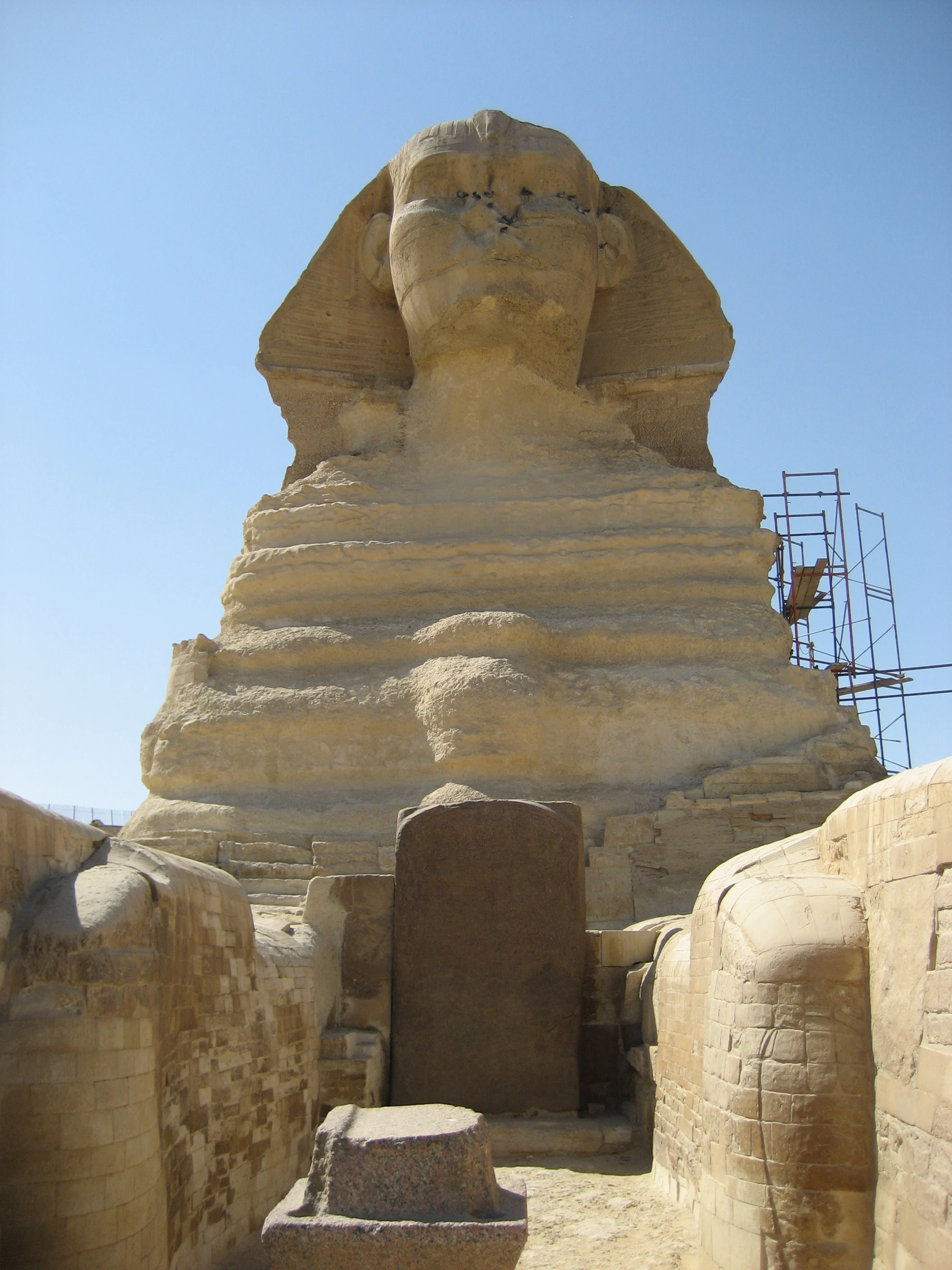
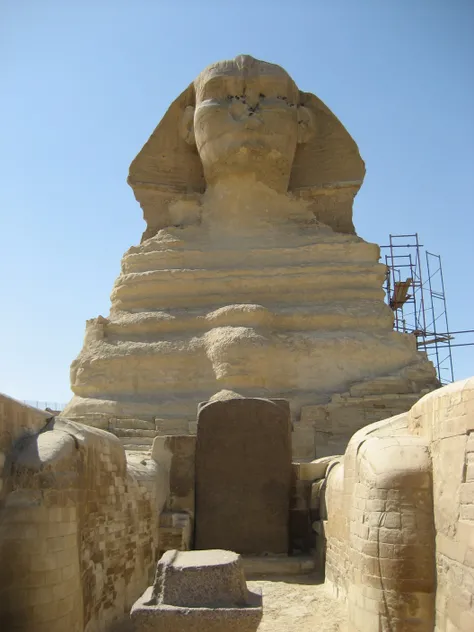
The Great Sphinx of Giza Platue

The Great Sphinx of Giza Platue

42
0
3
#Concept
#architectural

A sphinx (Ancient Greek: Σφίγξ [spʰíŋks], Boeotian: Φίξ [pʰíːks], plural sphinges) is a mythical creature with the head of a human and the body of a lion. This iconic symbol has captivated imaginations across cultures and eras, embodying both mystery and power.

In Greek mythology, the sphinx is a fearsome creature with the head of a human, the haunches of a lion, and sometimes the wings of a bird. Known for its treacherous and merciless nature, it poses riddles to travelers, devouring those who fail to answer correctly. This deadly version of the sphinx is famously featured in the myth and drama of Oedipus, where it symbolizes enigmatic challenges and dire consequences.

Contrasting with its Greek counterpart, the Egyptian sphinx is typically depicted as a man (an androsphinx) and is viewed as a benevolent yet powerful guardian. These majestic figures often flank the entrances to temples and tombs, embodying protective strength and royal authority. The Great Sphinx of Giza is one of the most renowned examples, serving as a sentinel to the ancient pyramids and a symbol of enduring legacy.

The sphinx holds a prominent place in art, literature, and architecture, transcending time and geography. Its dual nature—as both protector and enigma—continues to inspire awe and intrigue. The Dream Stele, an artifact found between the paws of the Great Sphinx, further enriches the legend, narrating the story of a pharaoh's divine encounter and subsequent rise to power.

Today, the sphinx remains a potent symbol in various artistic expressions, from paintings and sculptures to digital media. Its timeless allure is evident in both serious works and humorous reinterpretations, reflecting its versatility and enduring appeal. The sphinx, with its blend of human intelligence and animal strength, stands as a testament to humanity's fascination with mystery, power, and the unknown. Whether portrayed as a merciless riddle-giver or a benevolent guardian, this mythical creature continues to captivate and inspire.

Voir la traduction

Notes & Commentaires

-- /5
0 Notes

Pas encore reçu suffisamment d'évaluations ou de commentaires

no-data
Aucune donnée disponible
avatar
Chatter avec le modèle
Annonce
2025-01-29
Publier un modèle
2025-01-29
Mettre à jour les informations du modèle
Détails du modèle
Type
LORA
Temps de Publication
2025-01-29
Modèle Basique
SDXL 1.0
Mots Déclencheurs
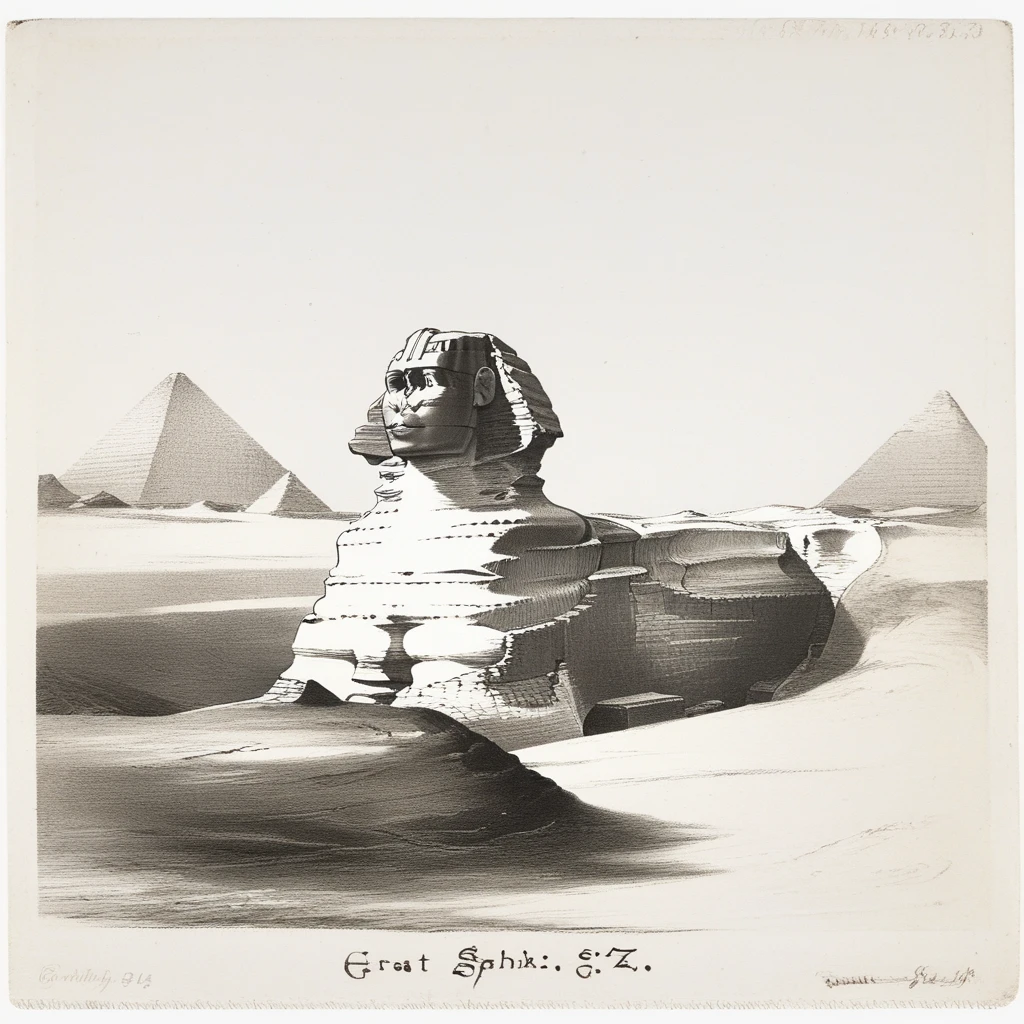
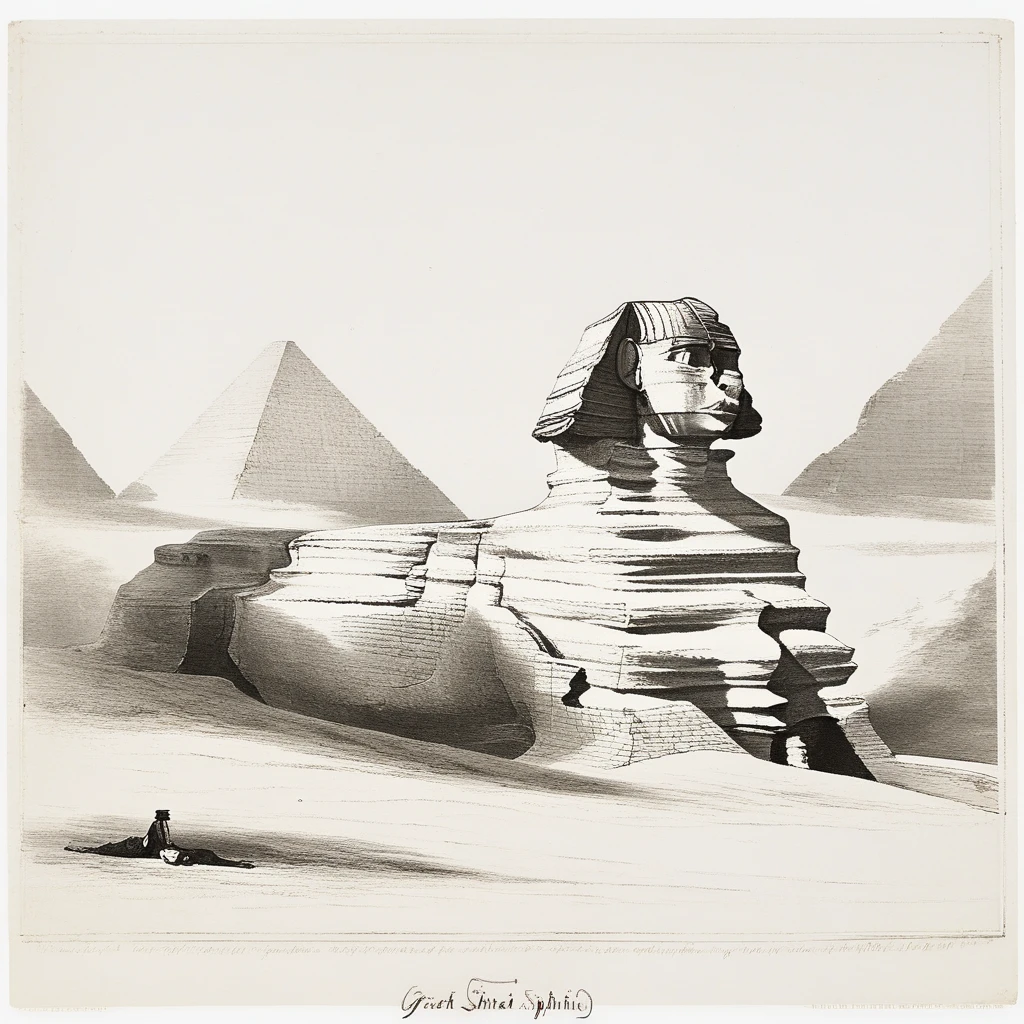
Great Sphinx of Giza, Pyramid of Khafre, Khafre’s Pyramid, 1884, north side, looking south
Great Sphinx of Giza, tail closeup, south side, looking north
Great Sphinx of Giza, south side, looking north
Great Sphinx of Giza, front paws, south side, looking north
Great Sphinx of Giza, Inventory Stela, tablet, front paws, west side, looking east
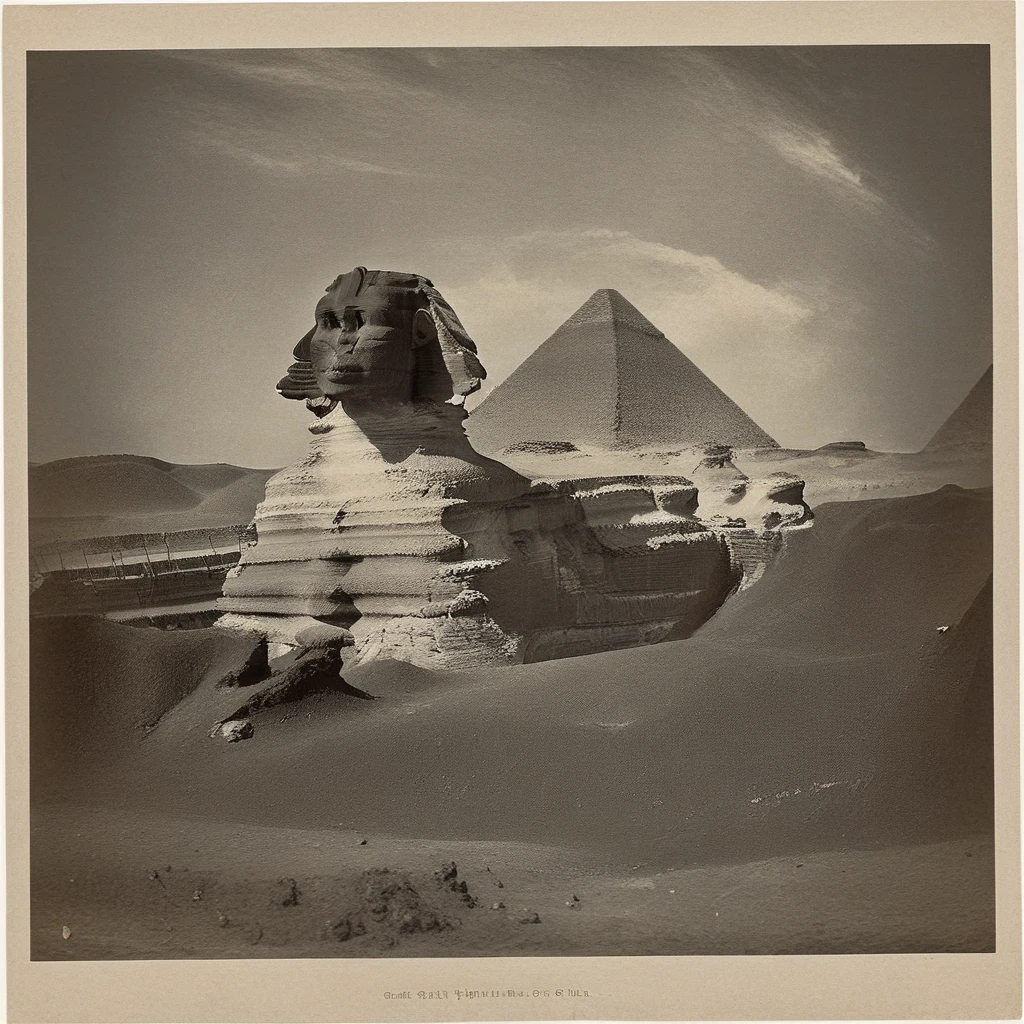
Great Sphinx of Giza, Pyramid of Khafre, Khafre’s Pyramid, buried in sand, 1884, south side, looking north
Copier
Voir plus
Introduction de version

Version Description:

In this test concept, I aimed to generate images of the Great Sphinx of Giza by leveraging basic compass orientations, facing directions, and historical eras. This approach allowed for a systematic exploration of the Sphinx's visual representation from different angles and time periods. Despite the Sphinx's actual orientation facing southeast (SE), the goal was to test the effectiveness of using these parameters for image generation.

Methodology:

  • Compass Orientation and Facing: Utilized the cardinal directions (north, south, east, west) to determine the Sphinx's orientation and facing direction in the generated images.

  • Era Specificity: Incorporated historical context by specifying the era or year, such as "1884," to reflect the Sphinx's appearance during that time period.

  • Keywords for Generation: Employed keywords that included the Sphinx's name, associated landmarks (e.g., Pyramid of Khafre), specific sides (e.g., north side), and directions (e.g., looking south) to create accurate and contextually relevant images.

Example Keywords:

  • Great Sphinx of Giza, Pyramid of Khafre, Khafre’s Pyramid, 1884, north side, looking south

  • Great Sphinx of Giza, Pyramid of Khufu, 1843, east side, looking west

  • Great Sphinx of Giza, Dream Stele, 1904, south side, looking north

This method provided a structured way to visualize the Sphinx from various perspectives and historical contexts, enhancing the richness and diversity of the generated images. It also tested the feasibility of using basic compass orientations and facing directions to create meaningful and accurate visual representations of this iconic monument.

The test concept demonstrated the potential of integrating compass orientations, facing directions, and historical eras to generate detailed and contextually enriched images of the Great Sphinx of Giza. This approach not only broadened the visual scope but also added depth to the historical and cultural significance of the Sphinx in the generated images.

Périmètre de la licence
Source: civitai

1. Modèle partagé uniquement à l'apprentissage et au partage. Droits d'auteur et interprétation finale réservés à l'auteur original.

2. Auteur souhaitant revendiquer le modèle : Contactez officiellement SeaArt AI pour l'authentification. Nous protégeons les droits de chaque auteur. Cliquer pour revendiquer

Périmètre de la licence de création
Génération d'images en ligne
Effectuer une fusion
Autoriser le téléchargement
Périmètre de la licence de commerce
Les images générées peuvent être vendues ou utilisées à des fins commerciales
La revente ou la vente après fusion du modèle est autorisée.
QR Code
Télécharger l'App SeaArt
Poursuivez votre voyage de création AI sur mobile