
A Comparative Usability Analysis of Leading Generative Image Models
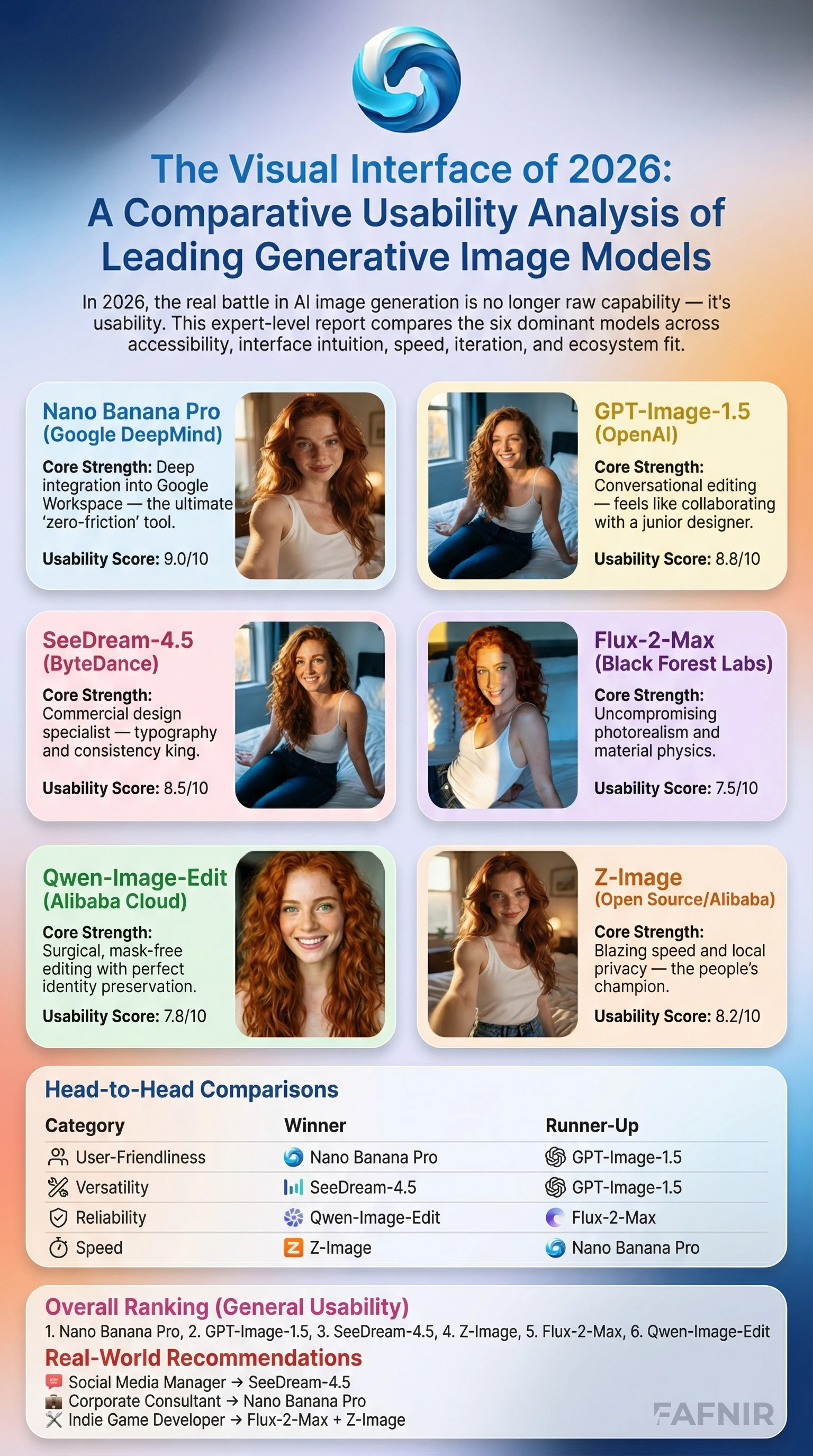
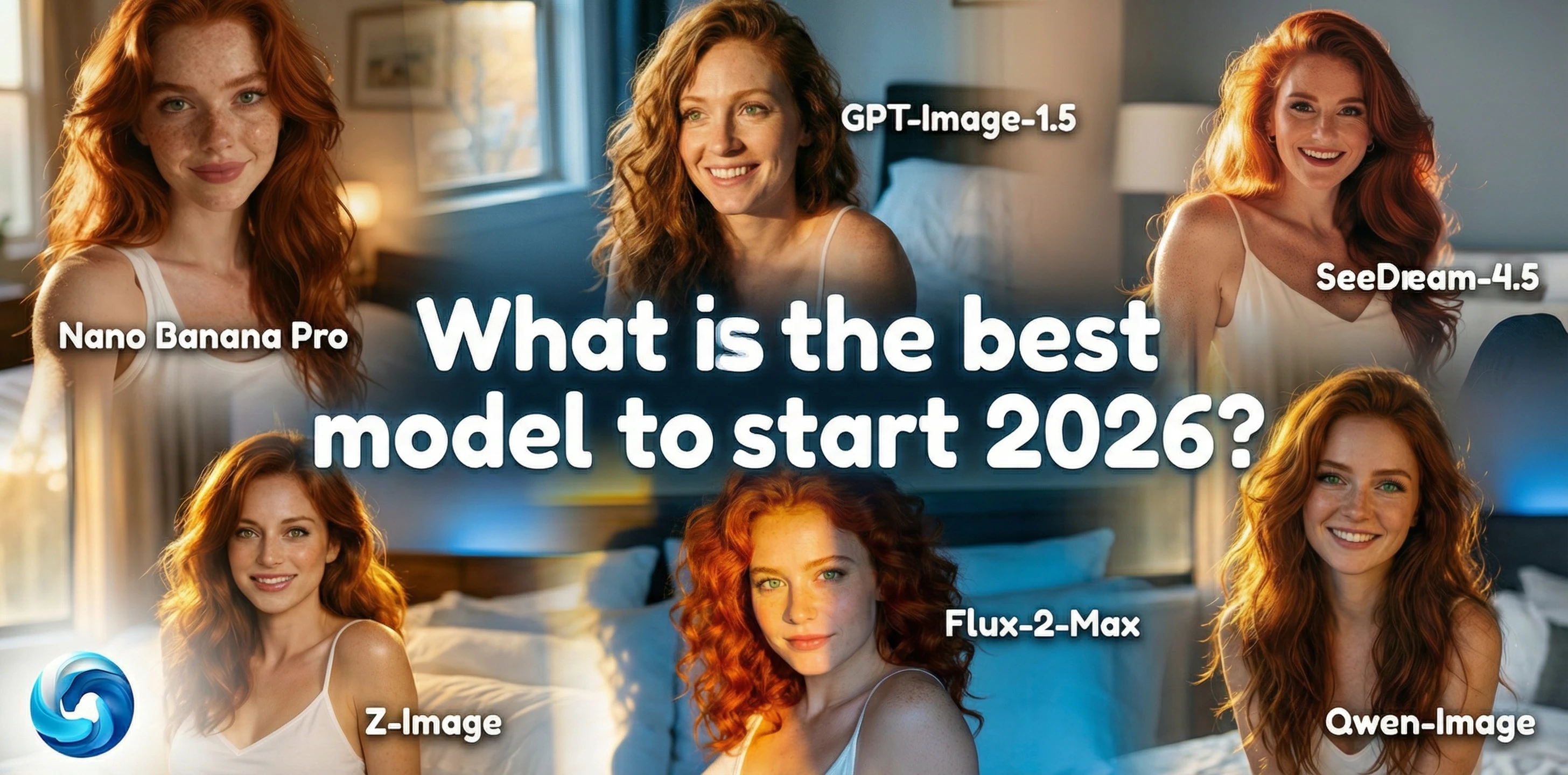
In 2026, the real battle in AI image generation is no longer raw capability — it's usability. This expert-level report compares the six dominant models across accessibility, interface intuition, speed, iteration, and ecosystem fit.
1. Introduction: From Novelty to Utility
The market has entered the utility phase. Top models can all render high-fidelity images, but the differentiator is now how seamlessly they fit into real human workflows.
Key Insight: The persistent "usability crisis" stems from either overly complex technical interfaces or restrictive safety filters that limit creative freedom.
Five Critical Usability Dimensions
- Accessibility & Onboarding – Hardware, pricing, login friction
- Interface Intuition – Natural language vs. technical parameters
- Speed & Flow State – Does latency break creative momentum?
- Error Recovery & Iteration – Easy fixes or full regenerations?
- Ecosystem Fit – Integration with existing tools
Market Bifurcation: Conversational creators (Nano Banana Pro, GPT-Image-1.5) vs. canvas/node-based engines (Flux-2-Max, Z-Image).
2. Individual Reviews
2.1 Nano Banana Pro (Google DeepMind)
Core Strength: Deep integration into Google Workspace — the ultimate "zero-friction" tool.
Standout Features:
- Omnipresent access via Gemini app, Google Search, Slides, Docs
- Reasoning engine understands complex analogies and logic
- Fast generation optimized for conversational flow
- Multi-shot consistency (up to 14 reference images)
Trade-offs:
- Sterile "commercial clarity" aesthetic
- Opaque daily limits and strict safety filters
- No local/offline mode
Usability Score: 9.0/10 – Best for general population and enterprise workflows.
2.2 GPT-Image-1.5 (OpenAI)
Core Strength: Conversational editing — feels like collaborating with a junior designer.
Standout Features:
- Natural-language edits ("Make the car red")
- Excellent text rendering for posters and infographics
- Seamless text+image workflow in same chat thread
Trade-offs:
- Noticeable "OpenAI sheen" (plastic/smooth look)
- Slower generation due to LLM pre-processing
- Subscription required
Usability Score: 8.8/10 – Ideal for beginners and iterative content creation.
2.3 SeeDream-4.5 (ByteDance)
Core Strength: Commercial design specialist — typography and consistency king.
Standout Features:
- Native 4K generation (no upscaling needed)
- Best-in-class typography (dense layouts, multilingual)
- Strong multi-reference consistency
- Batch generation support
Trade-offs:
- Fragmented access (third-party platforms)
- Higher compute cost for 4K
Usability Score: 8.5/10 – Top choice for marketing and e-commerce.
2.4 Flux-2-Max (Black Forest Labs)
Core Strength: Uncompromising photorealism and material physics.
Standout Features:
- Gold-standard realism (skin, fabrics, lighting)
- Granular technical control (guidance scale, steps)
- Less censored (depending on host)
Trade-offs:
- Very slow generation
- Steep learning curve (ComfyUI, precise prompting)
- Weak text rendering
Usability Score: 7.5/10 – Power user's dream, beginner's nightmare.
2.5 Qwen-Image-Edit (Alibaba Cloud)
Core Strength: Surgical, mask-free editing with perfect identity preservation.
Standout Features:
- Text-based object editing (no manual masking)
- Excellent consistency during changes
- Native bilingual support
Trade-offs:
- Weaker at pure generation
- Technical access (API/Hugging Face)
Usability Score: 7.8/10 – Essential specialist for precise edits.
2.6 Z-Image (Open Source/Alibaba)
Core Strength: Blazing speed and local privacy — the people's champion.
Standout Features:
- Sub-second generation on consumer hardware
- Zero cost after setup
- Total privacy and no censorship
Trade-offs:
- High setup barrier (installations, model downloads)
- Lower peak fidelity than cloud giants
Usability Score: 8.2/10 – Best for speed, privacy, and unlimited use.
3. Head-to-Head Comparisons
Category | Winner | Runner-Up | Notes |
|---|---|---|---|
User-Friendliness | Nano Banana Pro | GPT-Image-1.5 | Lowest barrier to entry |
Versatility | SeeDream-4.5 | GPT-Image-1.5 | Handles text, consistency, and commercial tasks best |
Reliability | Qwen-Image-Edit (editing) Nano Banana Pro (generation) | Flux-2-Max | Least "hallucination" in following instructions |
Speed | Z-Image | Nano Banana Pro | Real-time vs. fast cloud |
4. Overall Ranking (General Usability)
- Nano Banana Pro – Best balance of accessibility, speed, and integration
- GPT-Image-1.5 – Most intuitive conversational partner
- SeeDream-4.5 – Commercial design powerhouse
- Z-Image – Speed, privacy, and cost leader
- Flux-2-Max – Ultimate realism for experts
- Qwen-Image-Edit – Niche editing specialist
Detailed Scoring Matrix
Model | Ease of Use | Speed | Output Quality | Customization | Cost-Effectiveness | Total |
|---|---|---|---|---|---|---|
Nano Banana Pro | 10 | 9 | 8.5 | 6 | 9 | 8.5 |
GPT-Image-1.5 | 9 | 7 | 8.0 | 7 | 7 | 7.6 |
SeeDream-4.5 | 7 | 8 | 9.0 | 9 | 8 | 8.2 |
Z-Image | 5 | 10 | 7.5 | 8 | 10 | 8.1 |
Flux-2-Max | 4 | 3 | 10 | 10 | 5 | 6.4 |
Qwen-Image-Edit | 5 | 6 | 7.0 | 8 | 9 | 7.0 |
5. Real-World Recommendations
- Social Media Manager → SeeDream-4.5 (typography + consistency)
- Corporate Consultant → Nano Banana Pro (Workspace integration)
- Indie Game Developer → Flux-2-Max (finals) + Z-Image (prototyping)
6. Conclusion
The winner in 2026 is the model that disappears into your workflow.
For most users, that’s Nano Banana Pro. For professionals needing specific strengths, SeeDream, GPT-Image-1.5, and the open-source duo remain indispensable.
Analysis based on usability trends and reported capabilities as of early 2026.