Tipo
LORA
Data di pubblicazione
2025-09-13
Modello Base
Qwen-Image
Parola Chiave
HyperionXP1
Copia
Introduzione alla versione
Initial release of the LoRA.

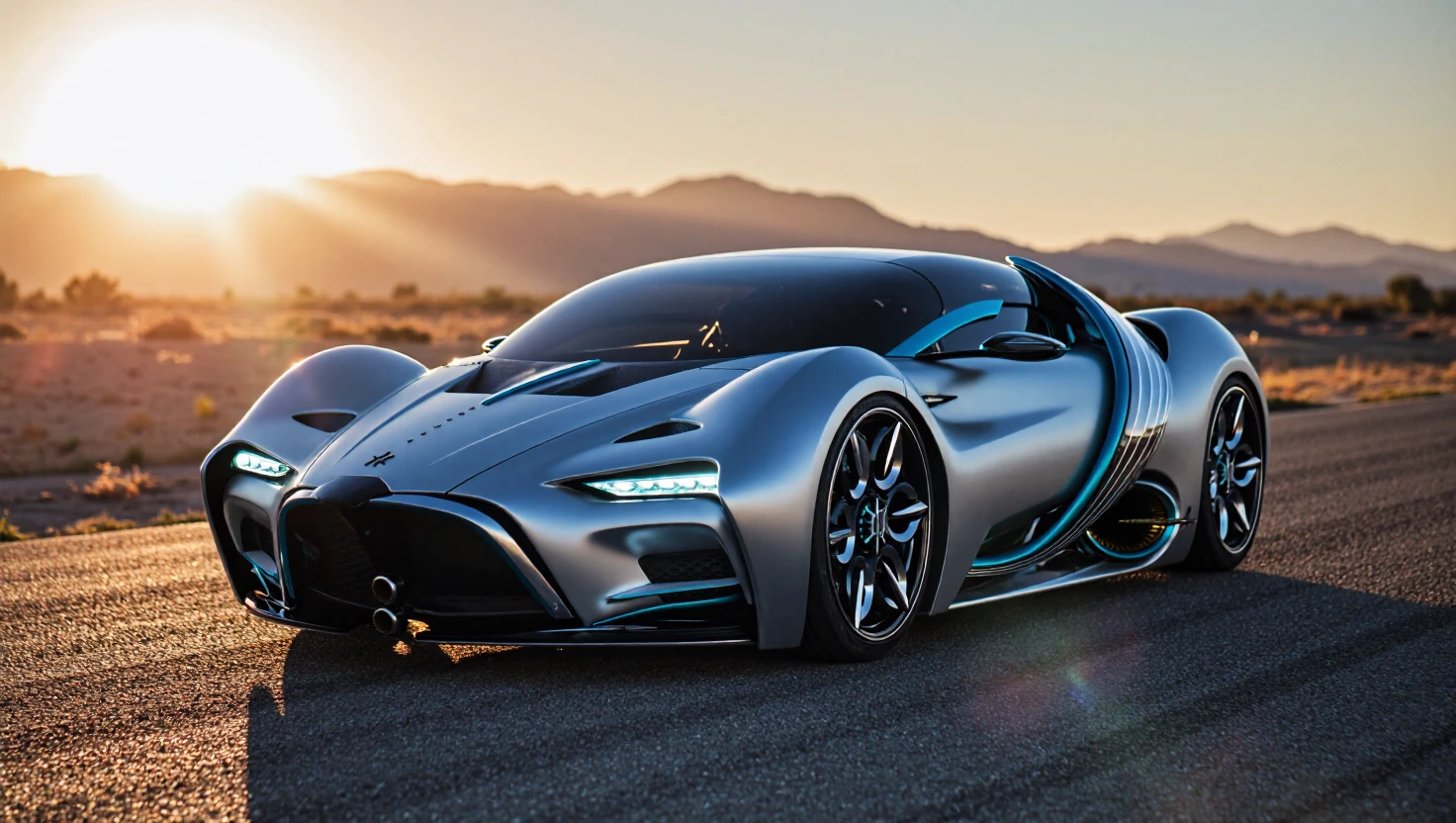
In August 2020, a previously unknown California startup named Hyperion Motors ignited the automotive world with a spectacular claim: a hydrogen-powered hypercar, the XP-1, capable of traveling over 1,000 miles on a single tank. With a projected top speed of 221 mph, a 0-60 mph time under 2.2 seconds, and a refueling time of just five minutes, the XP-1 wasn't just a car; it was a direct challenge to the battery-electric vehicle (BEV) empire. It promised to solve the biggest problems plaguing EVs—range anxiety and long charging delays—in one futuristic, aerospace-inspired package. However, nearly half a decade later, the XP-1 remains a ghost, a compelling vision whose tangible form seems to recede the closer one looks.
From its inception, the XP-1 was framed as something more than a vehicle. CEO Angelo Kafantaris, a former Hot Wheels designer, described it not as a product but as a "signal flare" and an "educational tool." The car's true purpose was to tell the "story of hydrogen" and attract attention and investment for Hyperion's much larger ambition: building a national hydrogen refueling infrastructure. The company positioned itself as an energy firm first and a car company second. The XP-1, with its dramatic "V-wing" doors, solar-panel-covered aerodynamic blades, and claims of "NASA technology," was the ultimate marketing instrument, designed to make hydrogen power undeniably cool.
On paper, the engineering was a blend of brilliance and baffling contradictions. The core concept was sound: a Proton Exchange Membrane (PEM) fuel cell would generate electricity to power four axial-flux motors, producing a staggering 2,038 horsepower. Instead of a heavy lithium-ion battery, the XP-1 would use lightweight ultracapacitors to store and deploy energy, allowing for lightning-fast charging and discharging without degradation—a perfect solution for a high-performance vehicle. The car's chassis, a carbon-titanium monocoque, aimed for a curb weight under 2,800 pounds, a fraction of BEV hypercars like the 5,100-pound Rimac Nevera. Yet, strange anomalies in the specifications, such as an unnecessary and technically questionable three-speed automatic transmission, raised doubts among experts about the design's maturity.
The most significant red flag, however, lies not in the car but in the company. Building a hypercar from scratch requires billions of dollars. Public records show Hyperion has raised only around $17 million since its founding in 2011, with a team of fewer than 40 employees. This profound mismatch between the company's grand vision and its shoestring budget casts serious doubt on its ability to manufacture 300 units at a projected $2 million each, let alone pioneer a nationwide energy network.
The project's trajectory since 2020 has only deepened this skepticism. The original 2022 production start date passed in silence. Then, in April 2024, a development prototype of the XP-1 was offered for public auction. The shocking revelation in the listing was that the vehicle was not hydrogen-powered at all; it ran on a conventional battery-electric system and was described as a "drivable show car." This was a tacit admission that, four years after its debut, the project's core hydrogen technology was not ready for even a single functional model. The auction was cleverly structured so the winning bid could be used as a down payment on a future production XP-1—a creative attempt to generate cash flow from a non-representative prototype.
Ultimately, the Hyperion XP-1 is trapped by a classic "chicken or egg" problem that it cannot solve alone. Even if the car were production-ready, its 1,000-mile range would be largely theoretical. The United States has fewer than 60 public hydrogen stations, almost all of which are in California. For an owner anywhere else, the car would be a multi-million-dollar sculpture. Without a pre-existing, robust refueling network, the XP-1 is a vehicle with nowhere to go.
The XP-1 has succeeded brilliantly as a "signal flare," generating immense publicity and forcing a conversation about hydrogen's potential. As a rolling prospectus and a piece of design theater, it is a masterpiece. But as a tangible automotive project, it has so far failed to deliver. It remains a fascinating but cautionary tale of a spectacular vision colliding with the harsh realities of engineering, finance, and infrastructure.

Initial release of the LoRA.
1. I diritti dei modelli ripubblicati appartengono ai creatori originali.
2. I creatori originali che desiderano reclamare il proprio modello devono contattare il personale di SeaArt AI tramite canali ufficiali. Clicca per rivendicare
