
Tipo
LORA
Data di pubblicazione
2026-01-08
Modello Base
Qwen-Image
Parola Chiave
FerrariF40
Copia
Introduzione alla versione
Initial release of the LoRA trained with 2512 and uint4 ARA.

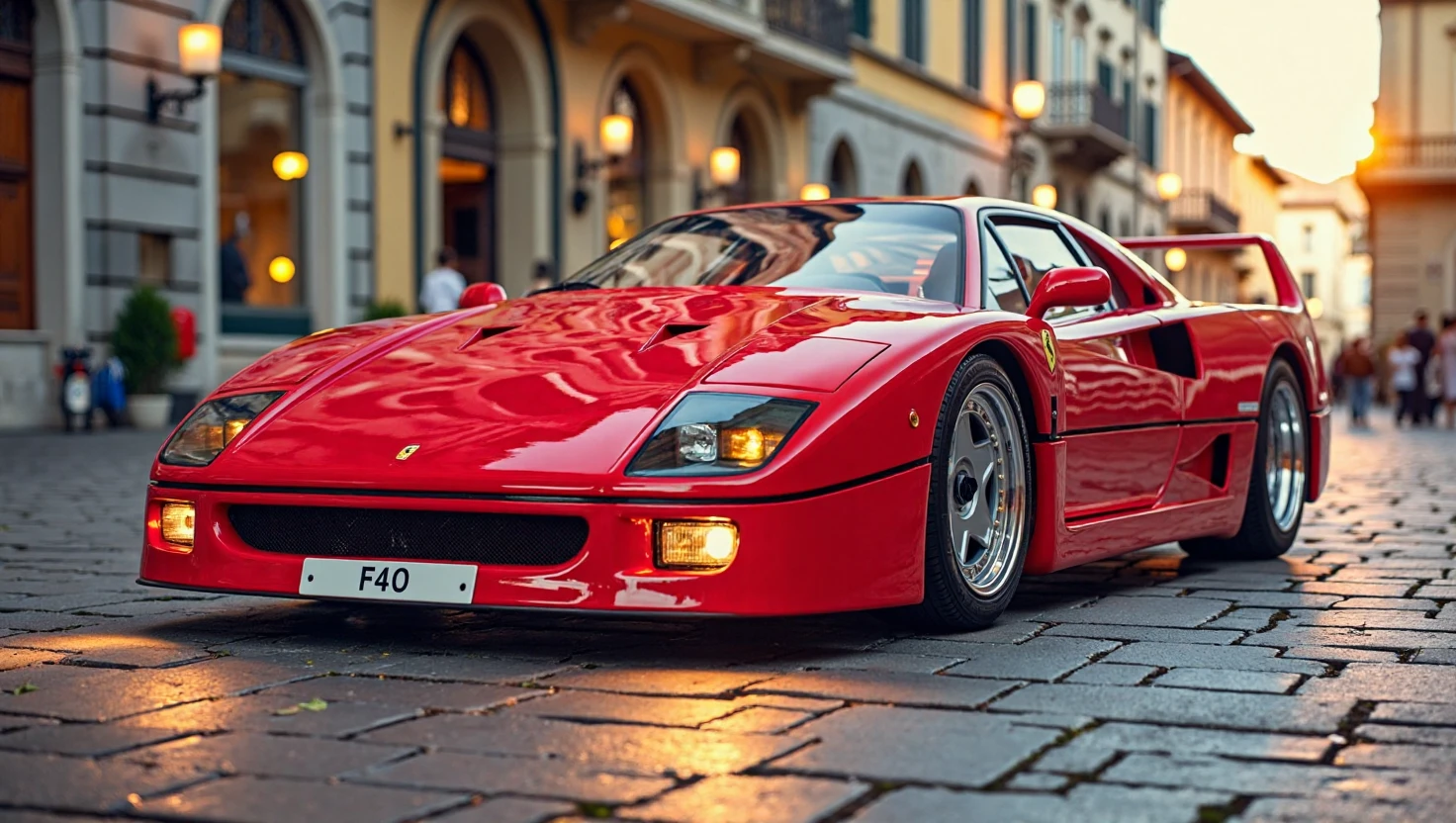
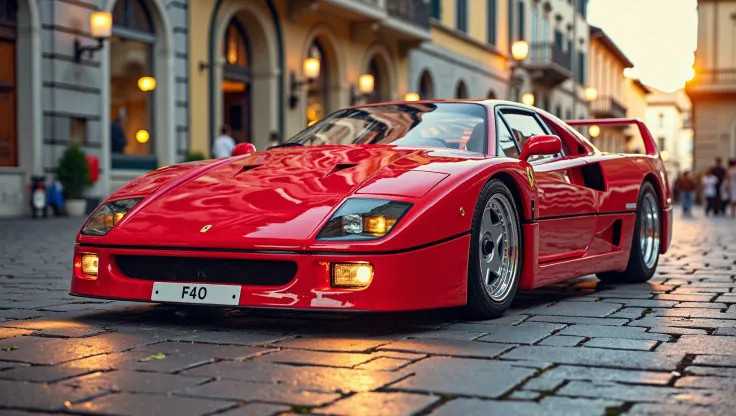
The Ferrari F40 is far more than a supercar; it is an automotive legend forged from legacy, rivalry, and a singular, uncompromising vision of performance. Its genesis was deeply personal, serving as both a celebration of the company's 40th anniversary and as the final automobile personally commissioned and approved by Enzo Ferrari before his death in 1988. The project was fast-tracked into existence in just 13 months, born from the ashes of the defunct Group B racing category, which left Ferrari with the advanced 288 GTO Evoluzione prototype—a perfect, race-bred foundation for a new road car. The F40 was also a direct and philosophical counter-punch to the technologically dense, all-wheel-drive Porsche 959. Where Porsche pursued electronic sophistication, Ferrari championed raw power, light weight, and an unadulterated connection between the driver and the road.
Styled by Pininfarina, the F40's breathtaking form is a masterclass in functional brutality. Every line and vent is dictated by aerodynamic efficiency, from the low, aggressive nose to the iconic, integrated carbon fiber rear wing designed to generate immense downforce for high-speed stability. The F40 was a pioneer in material science, being the first Ferrari production car to make extensive use of composites like carbon fiber and Kevlar for its body panels. This fanatical devotion to lightness resulted in a dry weight of just 1,100 kg (2,425 lbs). This ethos extended to the cabin, which was stripped of all non-essential items. There were no carpets, no sound system, no glove box, and no interior door handles—just a simple pull-cord. This spartan environment was a direct response to Enzo's belief that his cars were becoming "too plush" and reinforced the F40's purpose as a pure driver's machine.
At its heart lies the Type F120A engine, a 2.9-liter, twin-turbocharged V8 that produces a factory-rated 471 horsepower and 426 lb-ft of torque. This immense power, combined with the car's low weight, created staggering performance. The F40 famously became the world's first production car to claim a top speed over 200 mph (324 km/h), with an acceleration of 0-62 mph in a blistering 4.1 seconds. Power was sent to the rear wheels through a five-speed manual gearbox with an iconic open-gated shifter. True to its analog nature, the F40 featured no electronic driver aids—the steering was unassisted, the powerful brakes had no ABS, and there was no traction control to tame the engine's fury.
To drive the F40 is to engage in a visceral, demanding, and unforgettable experience. Its defining characteristic is its savage power delivery, marked by significant turbo lag followed by a ferocious, non-linear surge of boost that requires immense skill to manage. The handling is immediate and the mechanical grip is tenacious, but the car's limits are unforgiving. This challenging nature is the very essence of its appeal, celebrated not in spite of its difficulty, but because of it.
Initially planned for a run of 400 units, overwhelming demand saw Ferrari increase production to a final total of 1,311 cars between 1987 and 1992. While the vast majority were painted in
Rosso Corsa (Racing Red), specialist firm Michelotto also developed even more extreme racing versions, such as the F40 LM and Competizione, for privateer teams.
Today, the F40 is a blue-chip collectible. Its market value has soared from its original ~$400,000 MSRP to well over $2.5 million at auction, a price driven by its monumental legacy rather than its relative rarity. The F40's enduring importance is twofold. It is seen as the progenitor of the modern hypercar, setting the template with its focus on lightweight materials and extreme, track-focused performance. Simultaneously, it is revered as the last of the great analog supercars, a final, glorious monument to an era of unfiltered, mechanical engagement. A cultural touchstone and the definitive "poster car" for a generation, the F40's place as one of the most significant and thrilling automobiles in history is secure.

Initial release of the LoRA trained with 2512 and uint4 ARA.
1. I diritti dei modelli ripubblicati appartengono ai creatori originali.
2. I creatori originali che desiderano reclamare il proprio modello devono contattare il personale di SeaArt AI tramite canali ufficiali. Clicca per rivendicare
