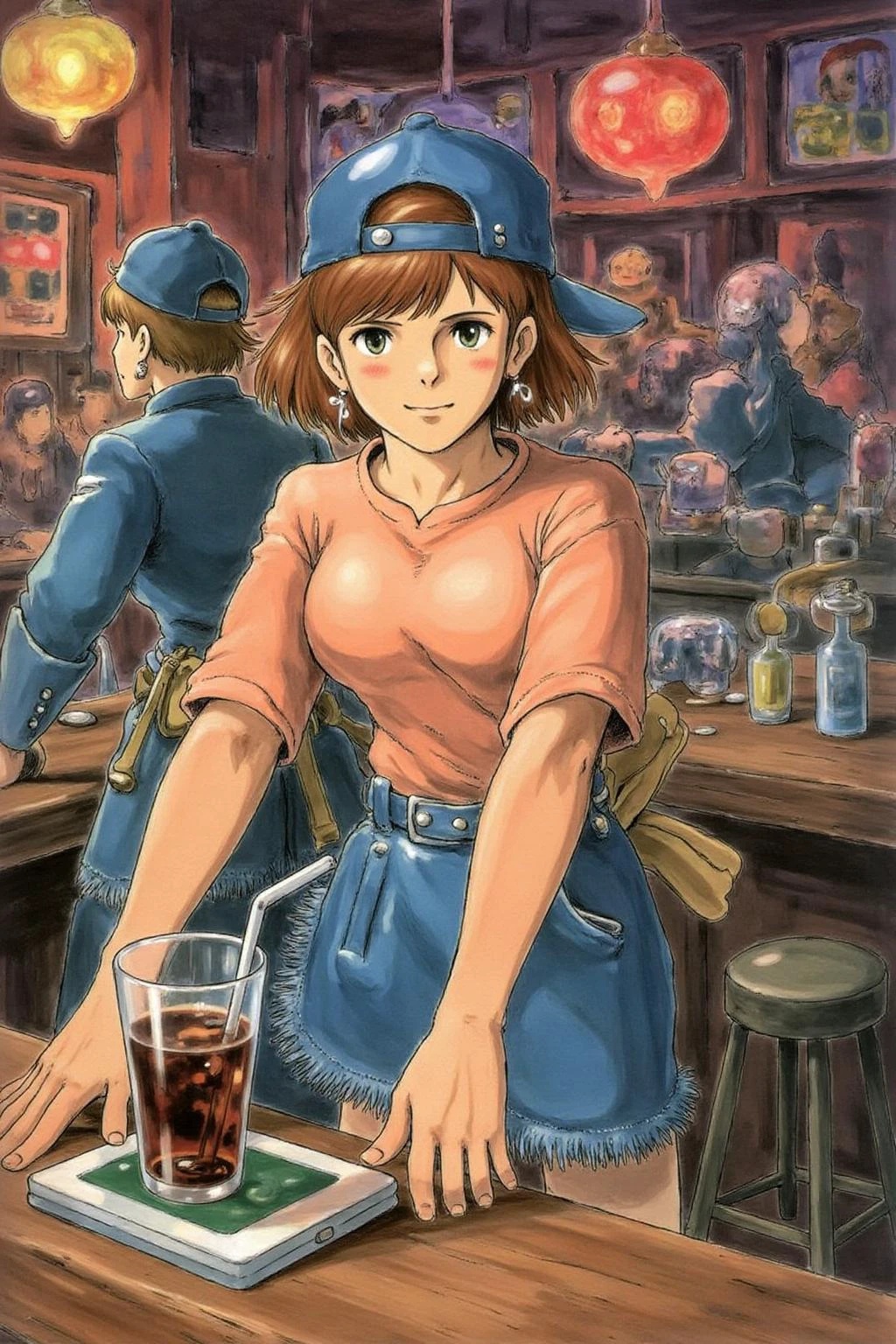
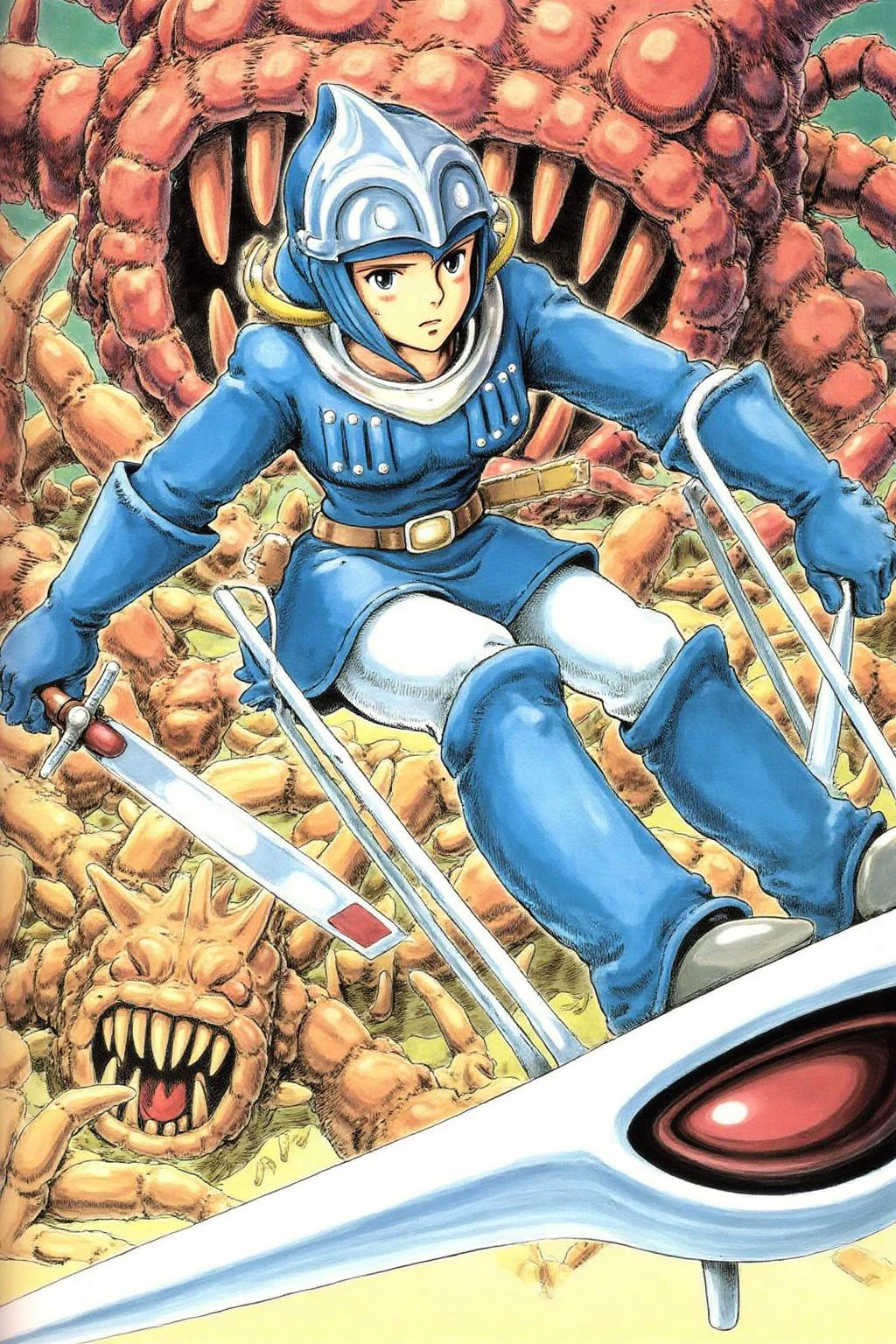
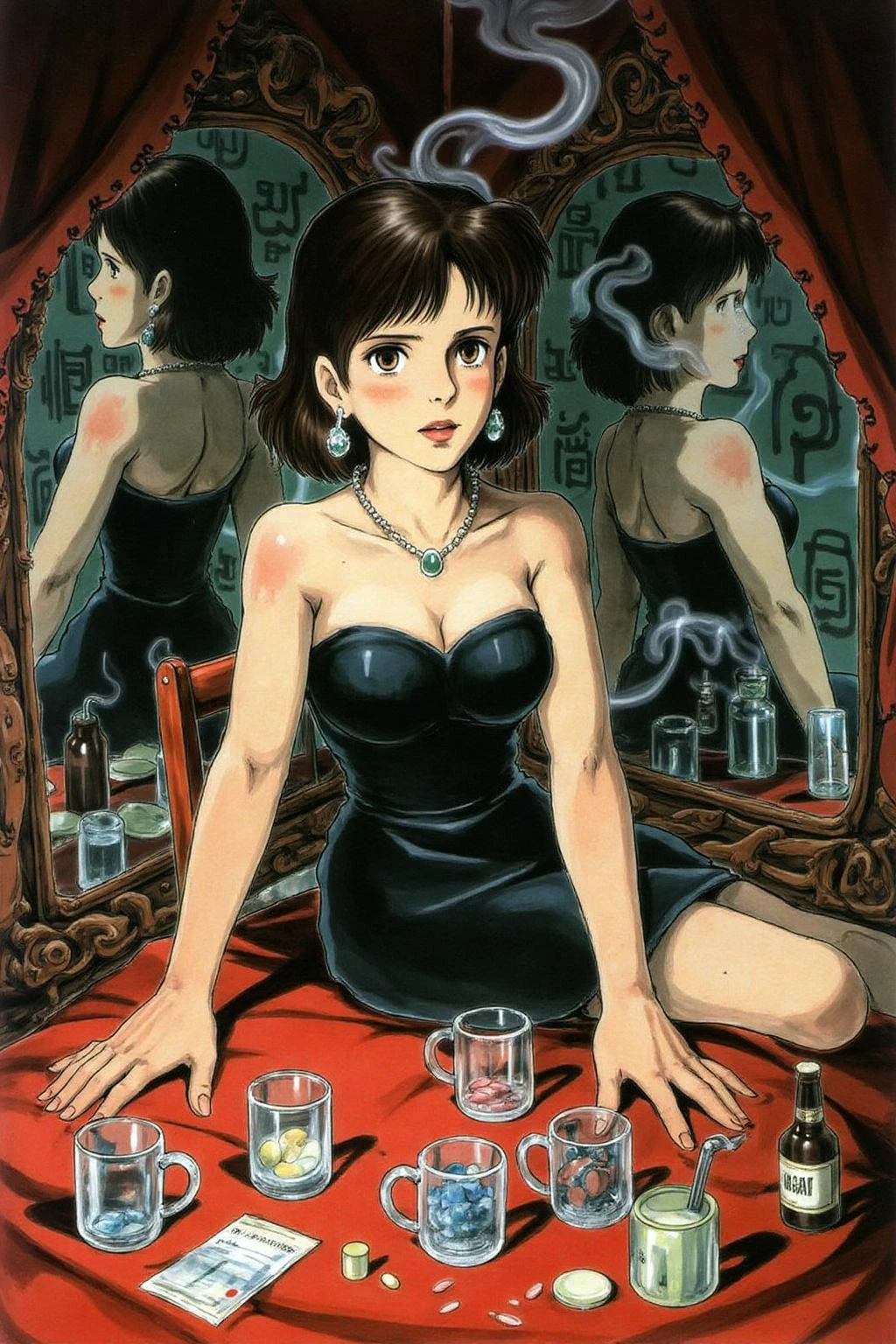
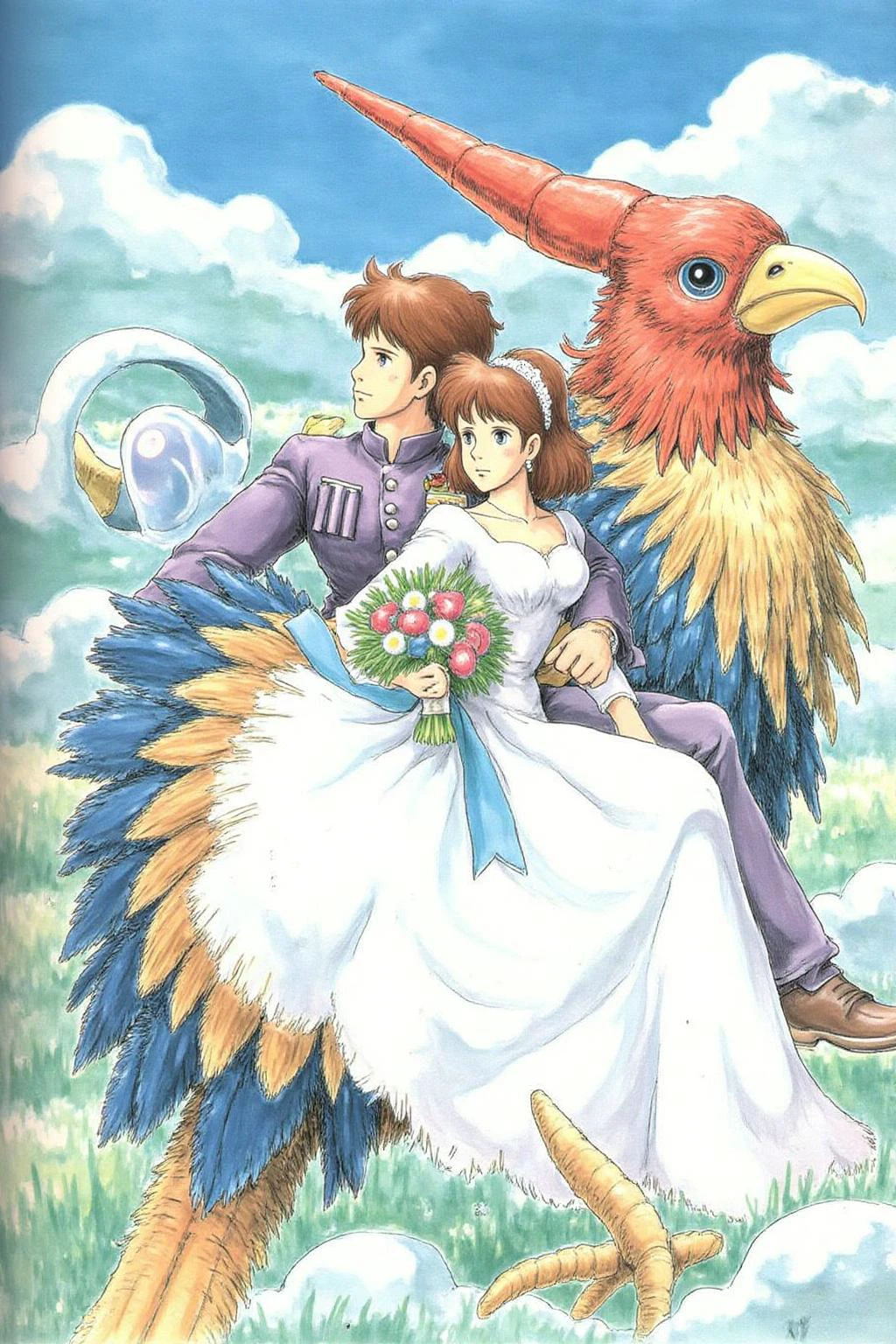
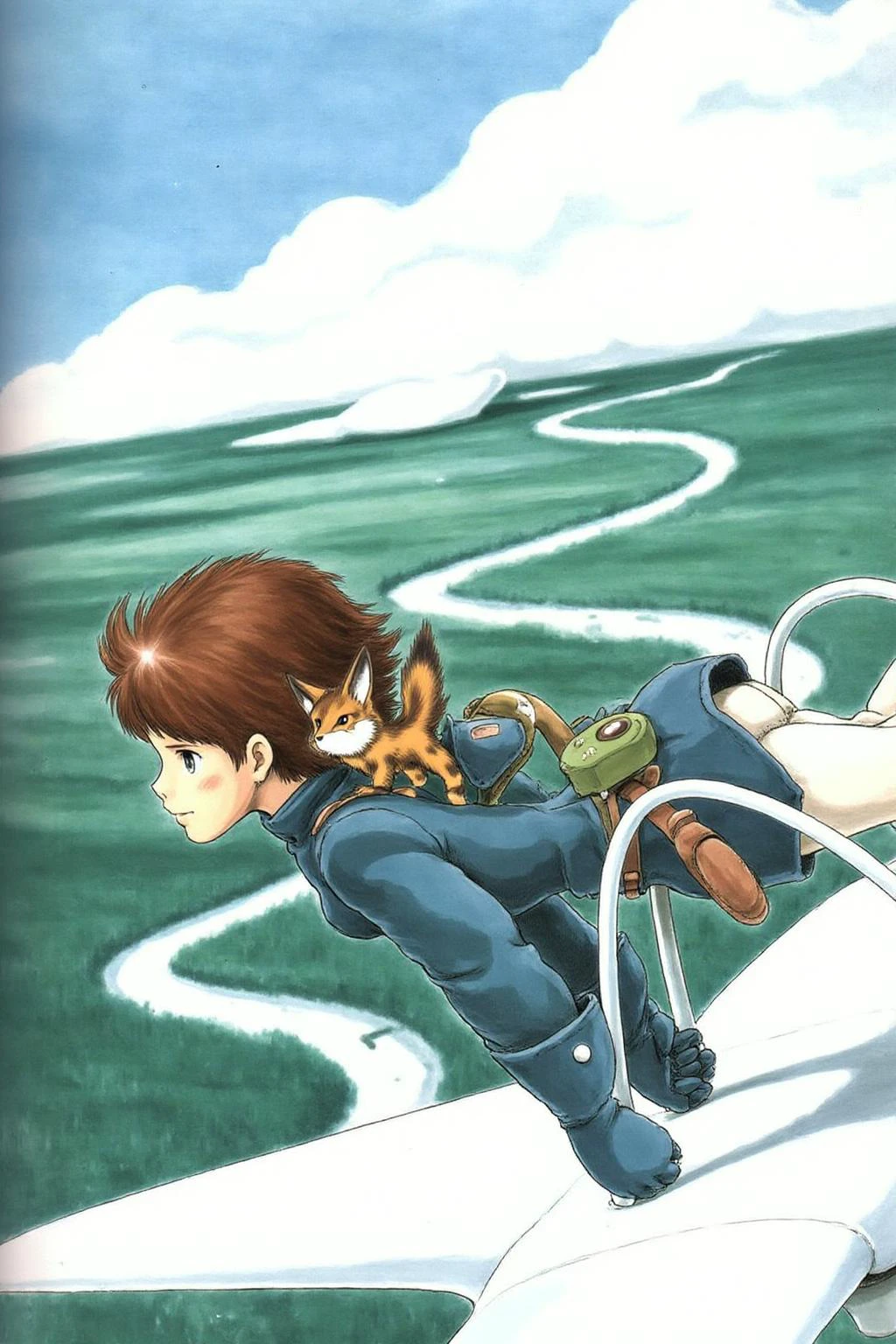
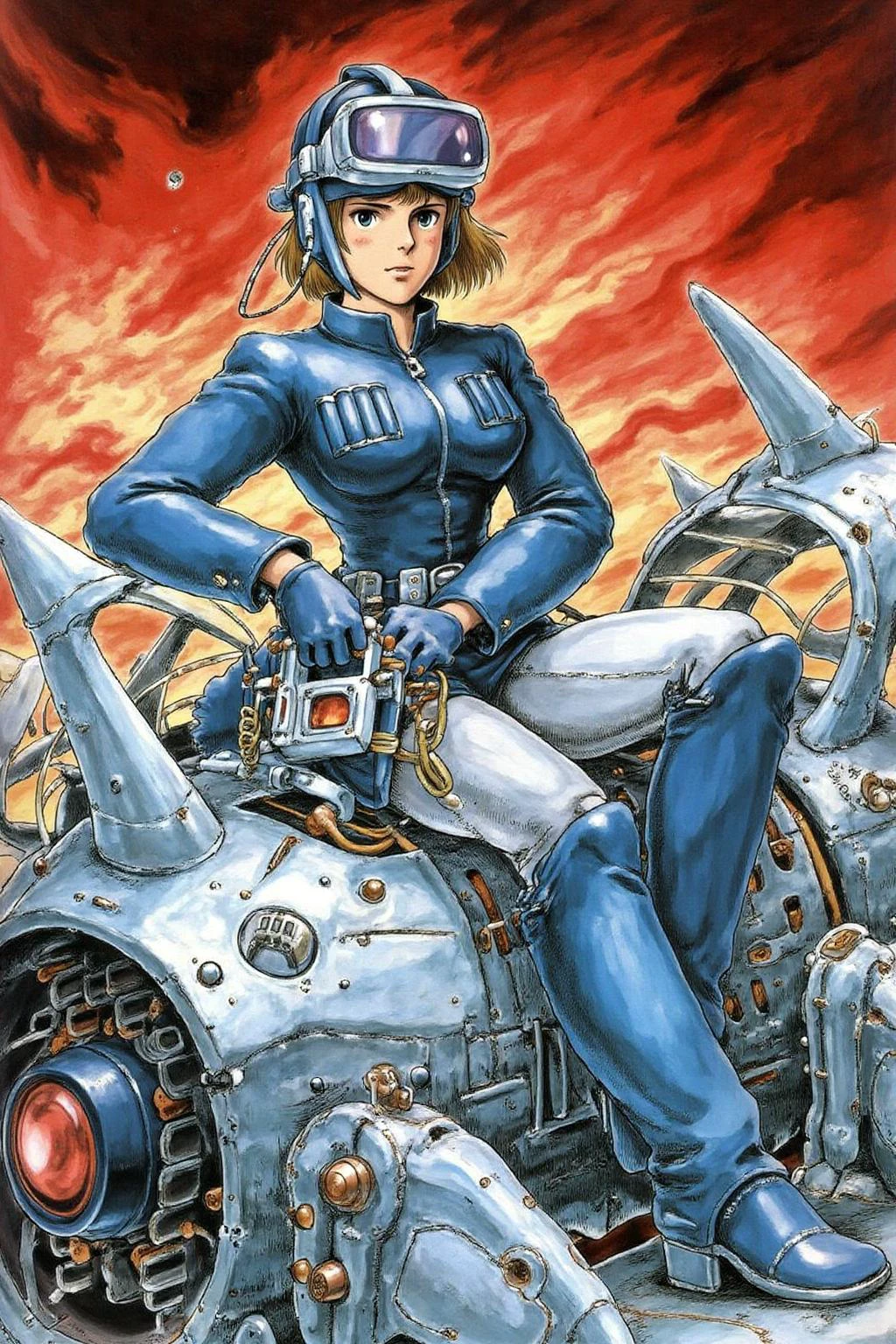
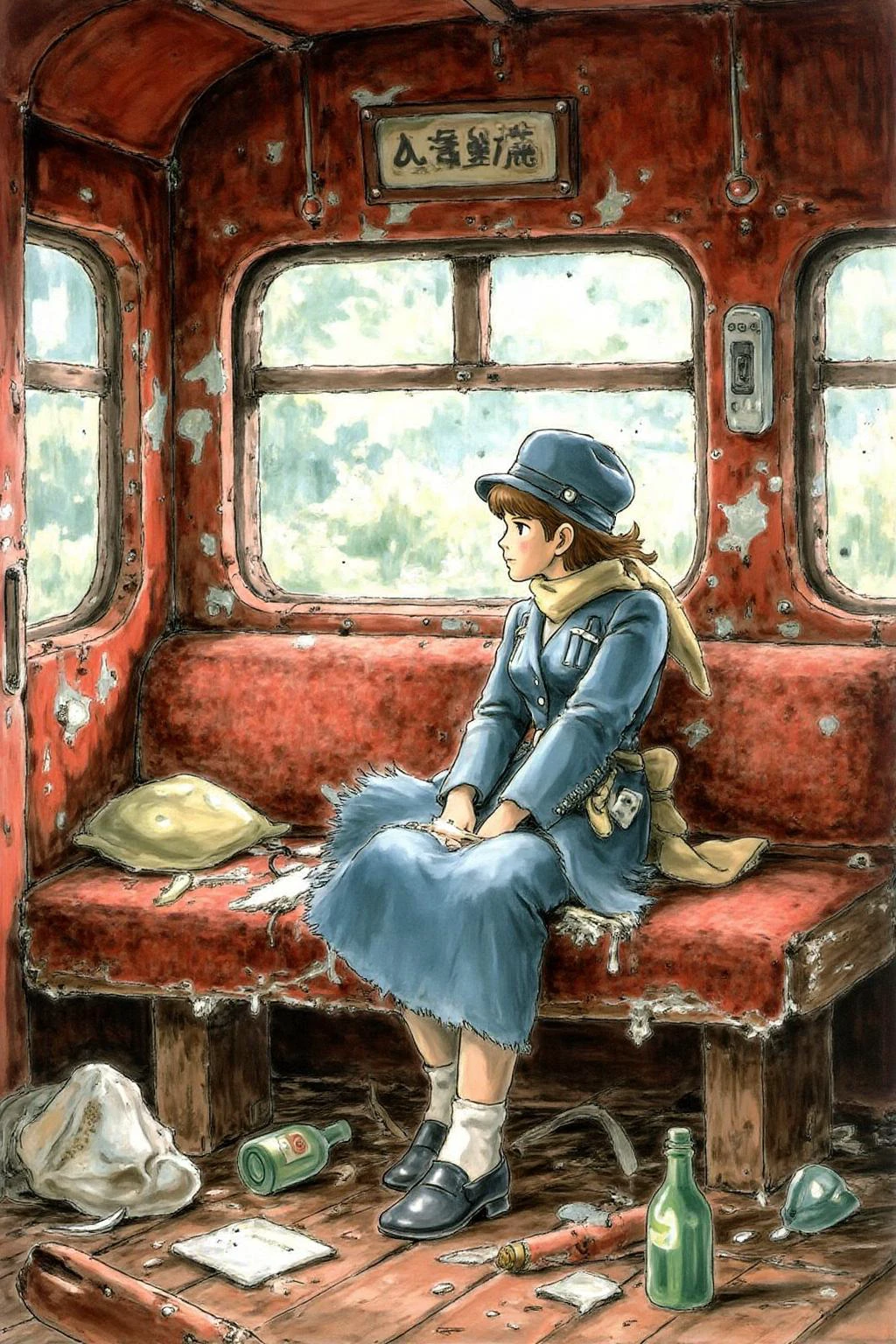
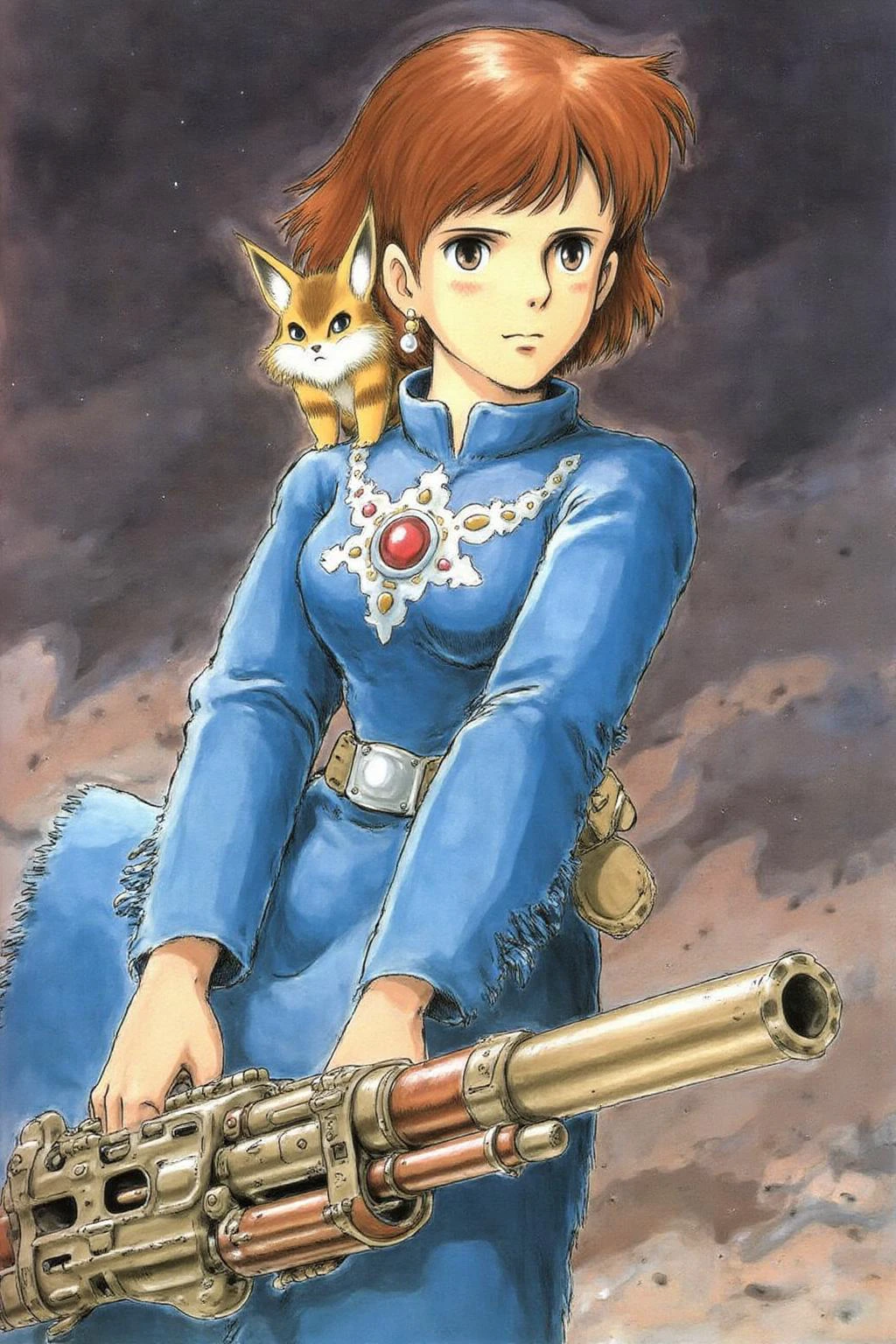
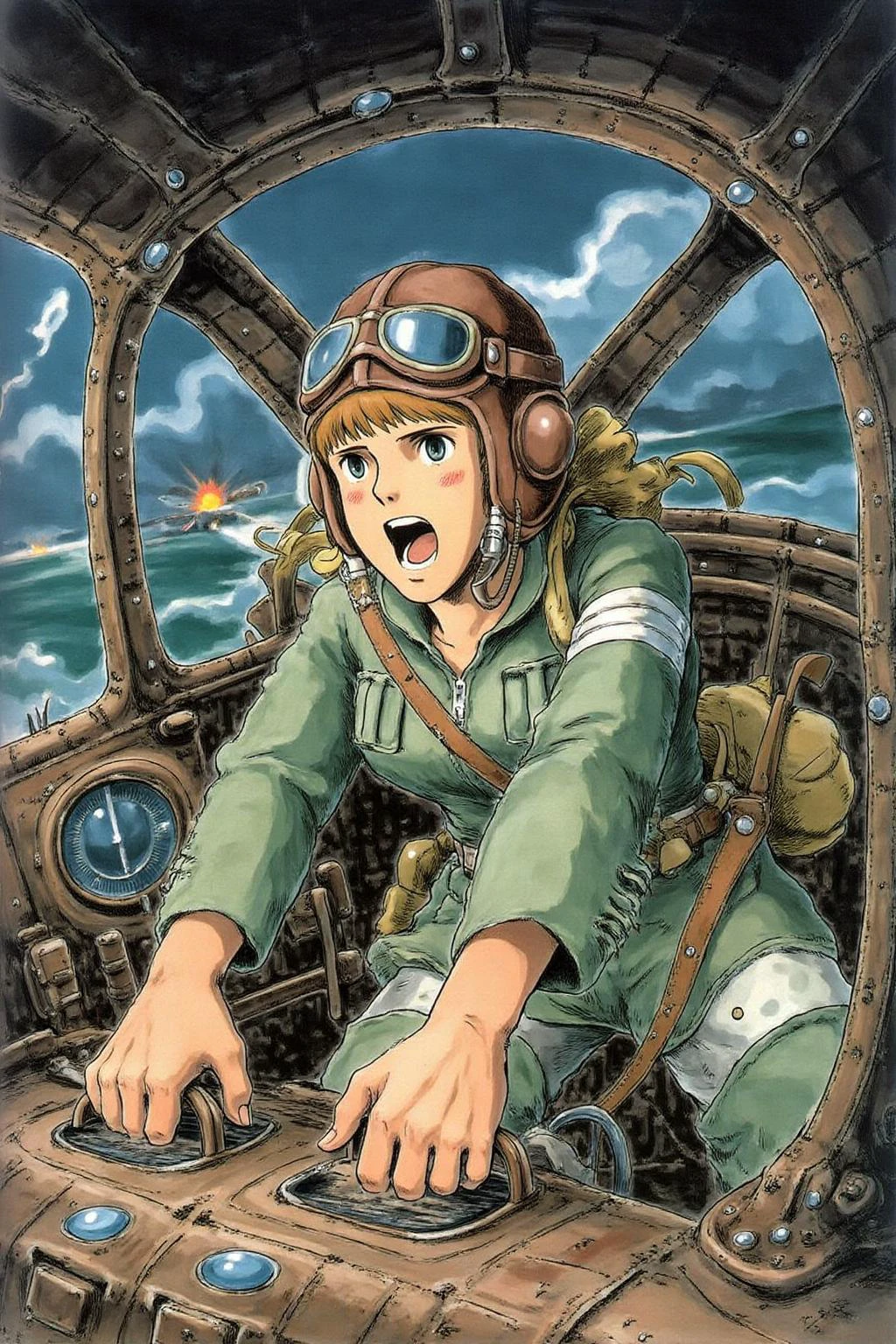
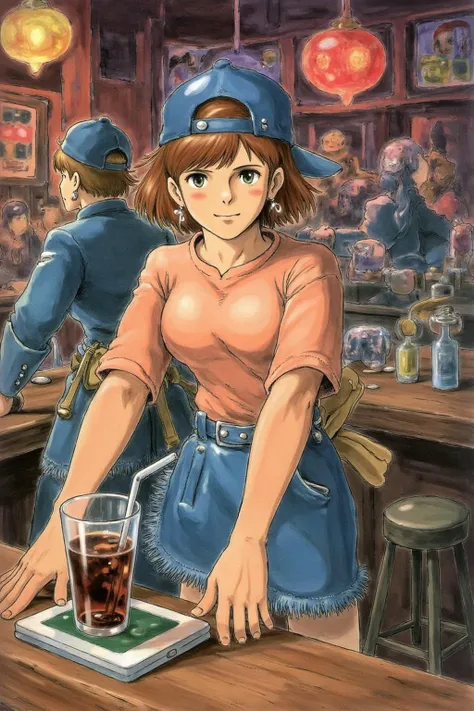
Trained mostly on Nausicaä manga cover illustrations by Hayao Miyazaki.
Miyazaki Sensei needs no introduction. Arguably the greatest animation director of all time, people around the world have enjoyed his imaginative and high quality anime films. Yet, I personally consider his Nausicaä of the Valley of the Wind manga to be his magnum opus. The manga format allows Miyazaki to tell a high fantasy story of the tallest order, with a level of world building that is on par with works such as The Lord of the Rings and Dune.
There are plenty of LoRAs for Studio Ghibli style anime, but there are none for his manga illustration style, so I decided to train one. Weight of 0.9 works well most of the time (1 can be too strong for some prompts).
Known problems:
The LoRA works, but is a bit inflexible, because the training material consists mostly of his cover illustrations for the manga. I will probably try again by blending in some material from the manga itself. You can try a lower weight if the prompt is not being followed.
Women always look like Nausicaä because she is the only woman that appeared in the training set 👆.
Since Teto is always perched on Nausicaä's shoulder in the training set, he will often appear uninvited, rendered with some weird beard 🤣
From ChatGPT: (Spoiler alert!)
Nausicaä of the Valley of the Wind (Manga)
The Nausicaä of the Valley of the Wind manga is a masterpiece by Hayao Miyazaki, first serialized in Animage magazine from February 1982 to March 1994. It is the original story upon which the 1984 animated film of the same name was based, but the manga offers a much deeper, more intricate, and expansive narrative compared to the film.
Overview
Creator: Hayao Miyazaki
Serialization: Monthly in Animage magazine.
Volumes: 7 tankōbon volumes (compiled collections).
Genre: Post-apocalyptic science fiction, fantasy, ecological epic.
Setting: A distant future Earth, after a cataclysmic event known as the Seven Days of Fire has devastated the planet, leaving behind toxic jungles and mutated creatures.
The manga explores complex themes such as environmentalism, war, the balance of power, and human nature. It features a richly detailed world, an expansive cast of characters, and philosophical undertones, distinguishing it as one of the greatest works of graphic storytelling.
Plot Summary
Post-Apocalyptic World
The story takes place in a world a thousand years after the collapse of industrial civilization. A massive ecological disaster, the Seven Days of Fire, left the Earth barren, with much of its surface overtaken by the Sea of Corruption (or Toxic Jungle). This vast, fungal forest is filled with toxic spores and massive, mutated insects like the Ohmu, which are central to the ecosystem. Humans live in small, isolated pockets, struggling to survive.
Nausicaä’s Role
Nausicaä, the princess of the Valley of the Wind, emerges as a key figure in this fractured world. She is deeply empathetic, wise beyond her years, and connected to the natural world, particularly the creatures of the Toxic Jungle. Her ability to communicate with the Ohmu and other creatures sets her apart as someone destined to bridge the divide between humanity and nature.
Main Themes
Environmentalism:
The manga delves deeply into the theme of environmental restoration and the interconnectedness of life. The Toxic Jungle, initially seen as a threat to humanity, is revealed to be a natural system cleansing the Earth of its past pollution.
War and Power:
Unlike the film, the manga portrays the destructive cycle of war in far greater detail. Multiple factions and kingdoms vie for power, often using destructive ancient technologies, such as the Giant Warriors, massive bioweapons from the past.
Philosophy and Morality:
Human Hubris:
Spiritual Connection:
Differences Between the Manga and the Film
The manga and the film share the same basic premise but differ significantly in depth, tone, and scope:
Length and Scope:
The film condenses the story into a two-hour runtime, covering only the first 2–3 volumes of the manga.
The manga spans seven volumes and explores a much broader world, with numerous additional characters, factions, and subplots.
Complexity:
The manga delves deeply into the politics, cultures, and histories of various factions, such as the Tolmekians, Pejite, and the Dorok Kingdom, whereas the film simplifies these elements.
Tone:
Character Development:
Ending:
The manga’s ending is very different from the film’s and much more ambiguous, leaving readers with profound questions about humanity’s relationship with nature, power, and morality.
Notable Characters (Beyond the Film)
Miralupa:
Charuka:
Namulith:
The Giant Warriors:
Art and Storytelling
Detailed Worldbuilding:
Visual Style:
The manga’s artwork is stunningly detailed, with richly textured depictions of the Toxic Jungle, machinery, and characters.
Philosophical Depth:
Legacy
Influence on Studio Ghibli:
The manga laid the foundation for many of Miyazaki’s recurring themes, such as environmentalism, strong female protagonists, and the critique of war and industrialization.
Critical Acclaim:
The manga is regarded as one of the greatest works in the medium, praised for its complex storytelling, character development, and visual artistry.
Timeless Relevance:
Conclusion
The "Nausicaä of the Valley of the Wind" manga is a towering achievement in graphic storytelling, offering a far richer and more complex narrative than the film. It is a profound exploration of humanity's relationship with nature, the cycles of war and power, and the possibility of redemption. For fans of the film or anyone interested in thought-provoking, beautifully rendered stories, the manga is an essential work.