
类型
LORA
发布时间
2025-08-14
基础模型
Qwen
触发词
Porsche959
复制
版本介绍
Initial release of the LoRA.

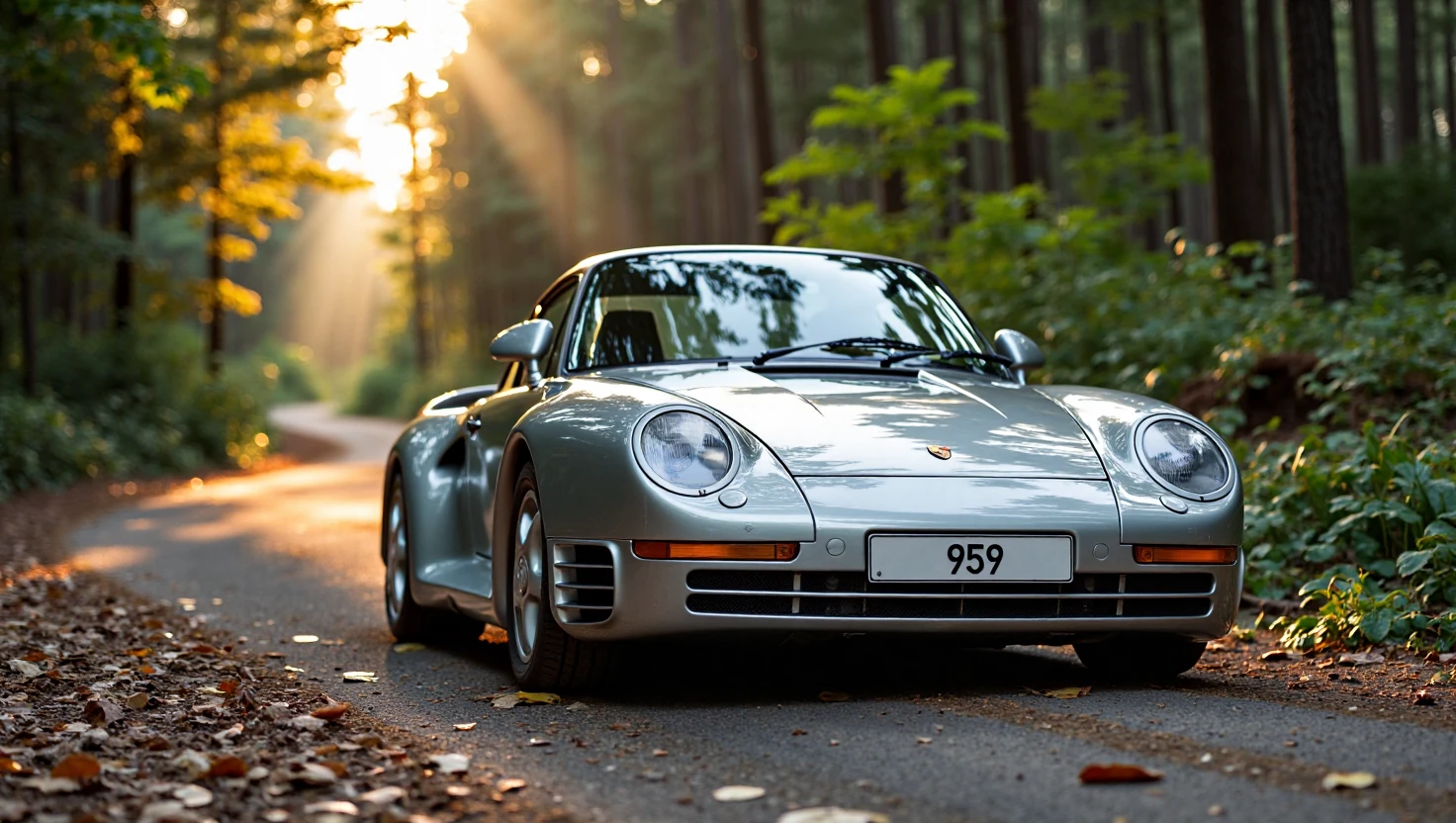
The Porsche 959 stands as a monumental achievement in automotive history, a vehicle of profound contradictions that defined the modern supercar decades before its time. It was a rally car that never raced in its intended championship, a road car with the soul of a desert racer, and a technological statement so advanced its influence is still felt today. Born from the crucible of motorsport's most audacious era, the 959's legend was forged not on the rally stages it was designed for, but in the punishing sands of Africa and in the minds of engineers who sought to reconcile blistering speed with everyday usability.
The 959's story begins in 1981, rooted in the FIA's spectacular Group B rally regulations. Chief engineer Helmuth Bott envisioned a technologically supreme, all-wheel-drive 911, and Group B provided the perfect development arena. The rules, however, carried a critical stipulation: to compete, manufacturers had to build and sell at least 200 road-legal versions for homologation. This single requirement is the sole reason the street-legal 959 exists. Porsche unveiled a stunning "Gruppe B" prototype at the 1983 Frankfurt Motor Show, signaling its intent. But development was complex, and before Porsche could complete its homologation run, a series of tragic accidents led the FIA to abruptly cancel the Group B category at the end of 1986. Porsche was left with a hyper-advanced rally car with no championship. In a masterful pivot, the company marketed the 959 not as a failed racer, but as the most capable supercar the world had ever seen, transforming a potential disaster into a legend.
The 959 was a quantum leap in engineering, a "digital" supercar where intelligent software was as critical as its hardware. At its heart was a 2.85-liter flat-six engine derived from the Le Mans-winning 956 and 962 race cars, featuring a novel hybrid cooling system with air-cooled cylinders and water-cooled heads. Its most revolutionary feature was the world's first sequential twin-turbocharging system in a production car. A small turbo provided instant boost at low RPMs, while a larger one came online above 4,300 rpm, a process managed by a Bosch Motronic ECU that eliminated the notorious turbo lag of the era and produced a seamless 444 horsepower.
This power was harnessed by the Porsche-Steuer Kupplung (PSK), the most advanced all-wheel-drive system of its time. Unlike reactive systems, the PSK was predictive, using sensor data to dynamically vary the torque split between the front and rear axles to optimize grip before it was lost. The chassis was a showcase of materials science, using aluminum, Kevlar composites, and a Nomex floor to keep weight low. The computer-controlled suspension featured adjustable ride height and damping, automatically lowering the car at speed to improve stability and aerodynamics.
While its Group B destiny was unfulfilled, the 959's competitive mettle was proven in the grueling Paris-Dakar Rally. The campaign began in 1984 with a stunning victory by the 953, a modified 911 test mule running the 959's prototype AWD system. A humbling 1985 effort, where all three 959-bodied cars failed to finish, provided invaluable data on durability. Porsche returned in 1986 with the definitive, twin-turbo 959, detuned to run on low-quality fuel. The result was total domination: a 1-2-6 finish that cemented the 959's reputation for toughness and adaptability.
The 959's arrival sparked a philosophical rivalry with the Ferrari F40. The Porsche was the technocrat's machine—comfortable, refined, and using technology to make its performance accessible in any weather. The F40 was the purist's icon—a raw, stripped-down race car for the road, sacrificing all comfort for lightness and visceral sensation. On a dry track, the lighter, more powerful F40 was faster, but the 959's AWD gave it superior off-the-line acceleration and unmatched stability in real-world conditions. This rivalry established the two archetypes—the tech-laden hypercar and the analog purist's machine—that define the supercar debate to this day.
The 959's legacy is immense and multifaceted. It served as the R&D program that established the core formula—all-wheel drive and twin-turbocharging—for every subsequent Porsche 911 Turbo. Its most unexpected legacy, however, was legislative. Because Porsche refused to supply cars for US crash testing, the 959 was illegal for import. When Microsoft co-founder Bill Gates had his car impounded, he began a decade-long lobbying effort. This resulted in the 1999 "Show or Display" law, which created a legal pathway for importing vehicles of "historical or technological significance" with limited mileage. The law, born from the 959's plight, has since allowed countless iconic automobiles to be legally enjoyed by American collectors.
The Porsche 959 was more than just a car; it was a benchmark and a blueprint for the future. It validated the digital technologies that define the modern supercar, proved its engineering in the world's toughest rally, and even reshaped US federal law. Its legacy is not just in the polished metal of the few hundred examples that exist, but in the DNA of every advanced performance car that followed.

Initial release of the LoRA.
1. 转载模型仅供学习与交流分享,其版权及最终解释权归原作者。
2. 模型原作者如需认领模型,请通过官方渠道联系海艺AI工作人员进行认证。我们致力于保护每一位创作者的权益。 点击去认领
