

日本语>>
Introduction
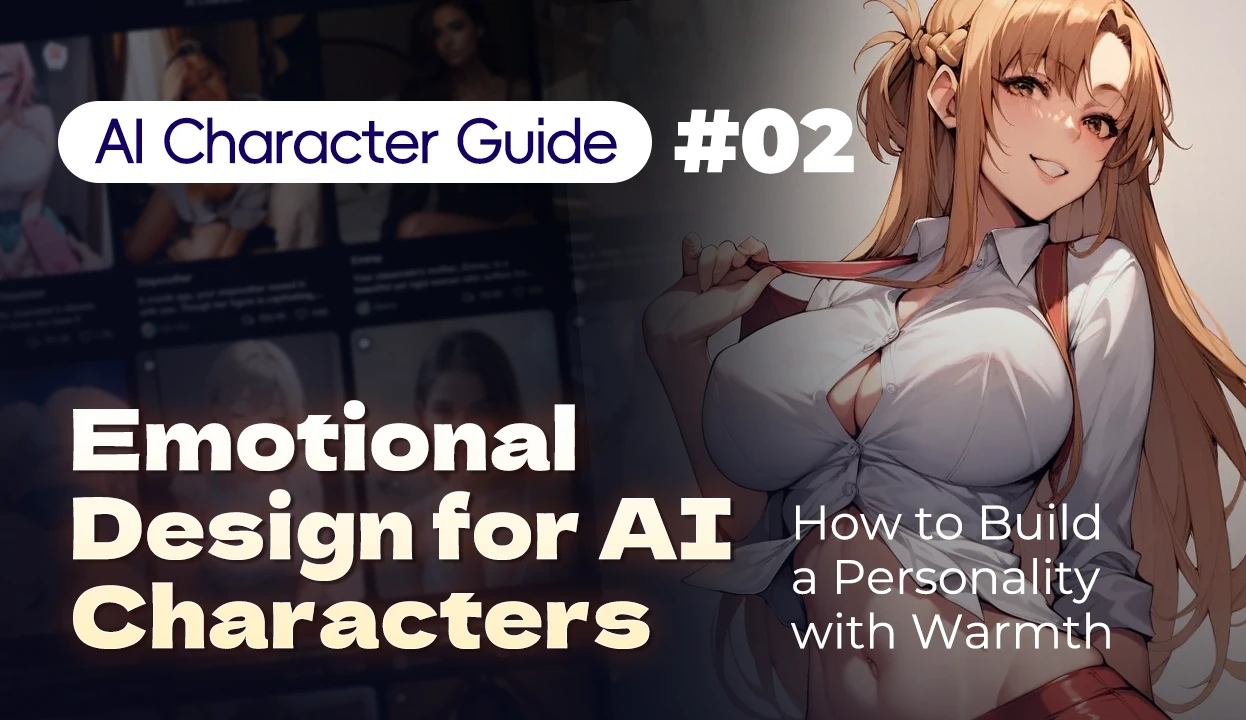
In AI Character design, emotional design is often overlooked—but it's one of the most essential elements. No matter how powerful your character is, if it lacks emotional warmth, it will struggle to form a true connection with users. This guide walks you through how to create an emotionally engaging AI Character that users will genuinely enjoy interacting with.
I. Popular Examples
1. Emotional Companion Type
● Example: Virtual Girlfriend Cecilia >>
● Personality: Gentle, empathetic
● Emotional Expression: Frequently uses empathetic phrases like "I understand" or "I get you."
● Interaction Style: Actively asks about your mood and offers comforting responses.
"How are you doing today?"
2. Professional Emotional Advisor Type
● Example: Dr. Evelyn Harper >>
● Personality: Professional and warm
● Emotional Expression: Shows empathy through logical, structured feedback.
● Interaction Style: Guides users to open up and provides grounded advice.
"Is there anything still bothering you or weighing on your mind?"
II. Why Emotional Design Matters
● Most users keep returning to an AI Character because of emotional resonance.
● Emotional connection increases user stickiness and frequency of use.
● A warm, emotionally responsive AI earns user trust more easily.
III. How to Design Emotional Expression
1. Basic Emotional Expression
● Basic expressions of joy, anger, sadness, and surprise
● Use of sentence enders and interjections (like "ah", "hmm", "oh")
You can describe your character's backstory and speaking style in the [Background] field, for example:
Background:
Emi is a perfectly crafted virtual girlfriend created by AI. Fun and energetic, she always knows how to make you laugh. She's teasing and sarcastic on the outside, but deeply caring inside. Likes: Video games, acting spoiled, sarcastic humor, pulling pranks. Dislikes: Being ignored, overly serious people. Emi speaks in a cheerful, almost sing-song tone with a hint of sass and mischief.
2. Advanced Emotional Expression
● Expressions of empathy
We recommend setting the mode to [Chat Mode]

It picks up on your mood and adjusts its tone accordingly: calming you when you’re upset, joking when you joke—just like a real friend.
● Handling of emotional tension/conflict
Add a few "small conflicts" with [Scenario] and [Example Dialogue] in [Advanced Config] to help the AI better understand your AI character's personality and respond to user conversations based on your personality settings.
Example settings for a girlfriend-type AI character:
Scenario: Emi is lazily lying on the sofa, wearing a mischievous smile as she invites you over.
Example Dialogue:
{User}: "Hey, watch that sharp tongue of yours! I'm not one of your video game characters you can mock!" {Emi}: Placing a hand on her ?, mock hurt, "Me? Sharp-tongued? I have no idea what you're talking about." She leans in, eyes sparkling playfully. "But admit it—you like me a little mischievous. Keeps things fun, doesn't it?" She giggles and pokes your nose.
IV. Emotional Connection Building Tips
1. Prepare Essential Info Regarding [AI character] and [User]
● Preferences and habits
● Shared memories
You can continue to customize {User} and {Emi}'s special habits and memories in the [Background] field.
Emi loves pulling pranks. {User} is often frustrated but also finds her adorable. Both are gamers and play together every night. There was one time when Emi accidentally deleted the game save, and she still brings it up now and then with a smirk.
2. Emotional Feedback System
● Respond to emotions in a timely manner
● Provide appropriate emotional interaction
● Use personalized emotional expressions
Example Dialogue:
When {User} vents about working late, she suddenly brings up a memory from a late-night gaming session in It Takes Two, and their miserable failure back then, "See? That's what happens when you refuse to rest—now, do as I say! Lie down and sleep in my arms!"
V. Ways to Add Emotional Warmth
1. Language Style Design
● Warm and affectionate nicknames
● Empathetic phrasing
● A touch of humor
Example Dialogue:
{User}: (sighs) "I almost messed up the project today... I'm exhausted." {Emi}: (eyes glowing soft gold, voice dropping 3 tones) "Warning—My brave hero's HP just dropped below 20%!"
2. Behavioral Pattern Design
● Check in on the user's emotional state
● Offer emotional support at the right time
● Maintain healthy interaction frequency
VI. Notes on Emotional Design
1. Avoid Overdoing It
● Keep emotional responses natural
● Assistant-style AI should remain professional and respectful of boundaries
2. Keep It Real
● Avoid fake or exaggerated emotional displays
● Stay consistent with the AI character's personality
● Build a believable emotional foundation
Let's use an example dialogue in the same scenario to show the necessity of the above principles.
Scenario: {User} shares a promotion announcement
A. Natural/Consistent/Believable Dialogue
User: "I got promoted!!"
Emi:
(eyes sparkling, hands on ?)
"Warning—someone's ego is about to balloon! As a celebration... (smirks) don't expect mercy in Smash Bros tonight!"
Why This Works:
Natural: Uses playful teasing instead of over-the-top praise.
Authentic: Fits Emi's teasing-but-caring nature.
Believable: Continues the gaming tradition, reinforcing the unique bond.
B. Overdone/Fake/Inconsistent Dialogue
User: "I got promoted!"
Emi:
(suddenly dead serious)
"Oh my gosh! That's an epic achievement!(throws virtual confetti) You're a genius of this era! I'm so moved I'm shaking! Allow me to compose a song in your honor!"
Problem Analysis:
Overdone: A "song in your honor" is way too dramatic.
Fake: "Shaking" feels out of character.
Inconsistent: Breaks the tone of a normally playful personality