Crear flujo de trabajo
Construido sobre SeaArt ComfyUI
creation

Puede que te guste

Flujos de trabajo destacados

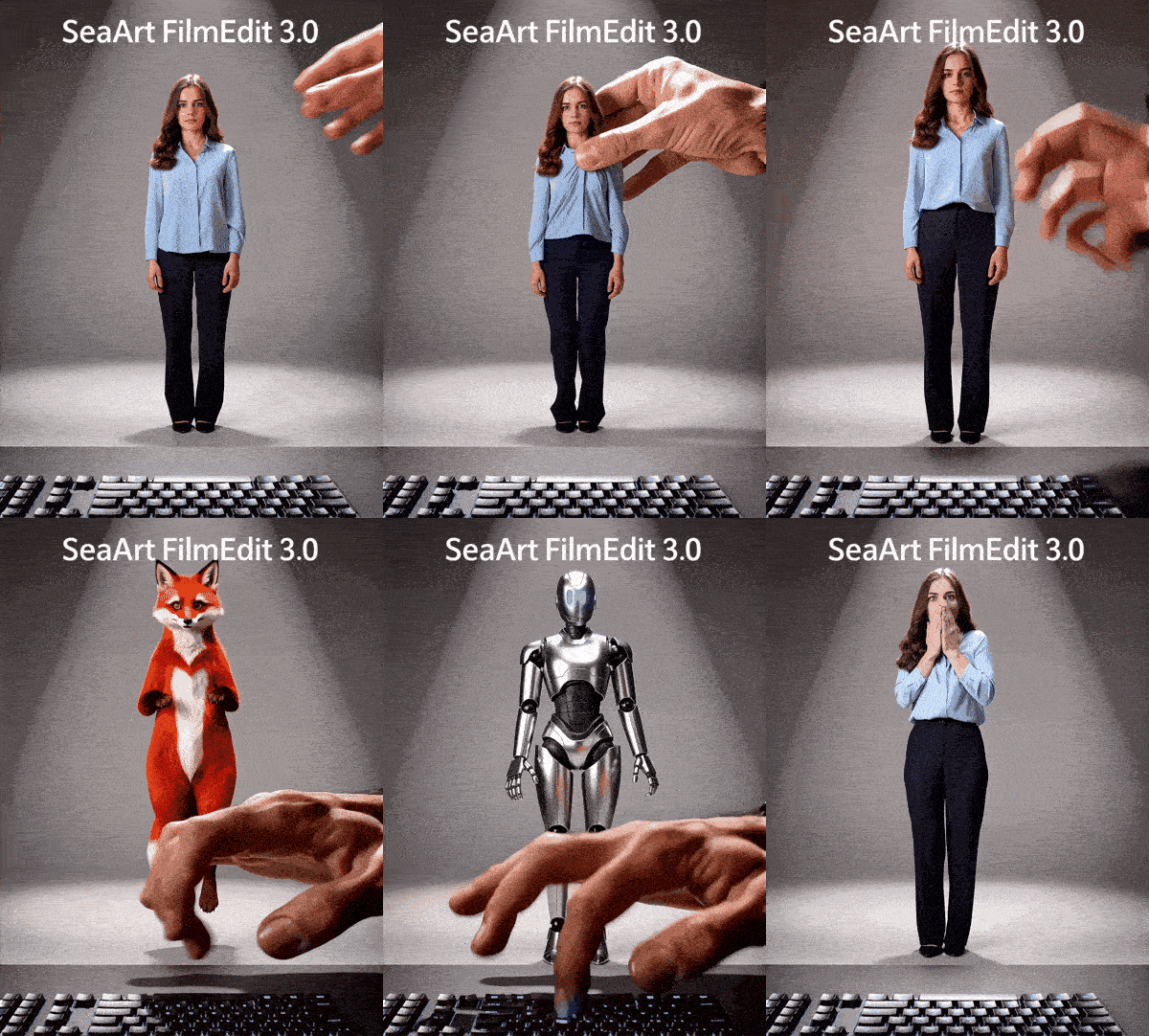
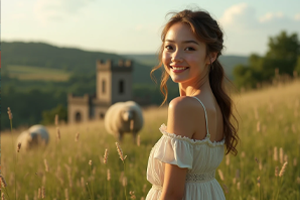
LTX2.3-Audio-video generation

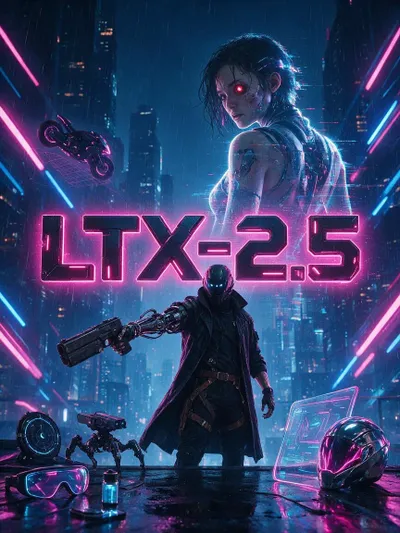
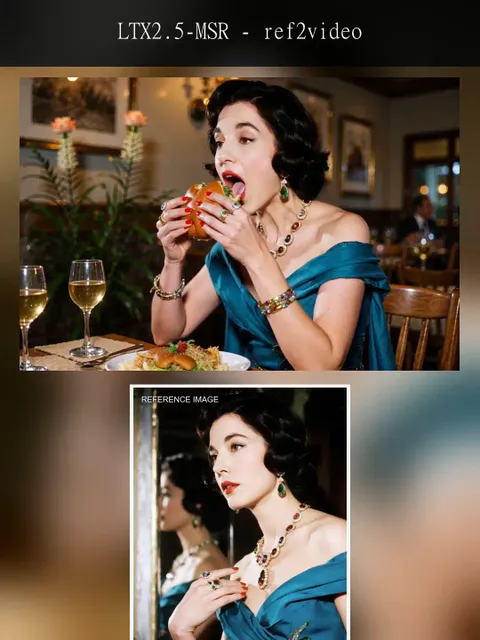
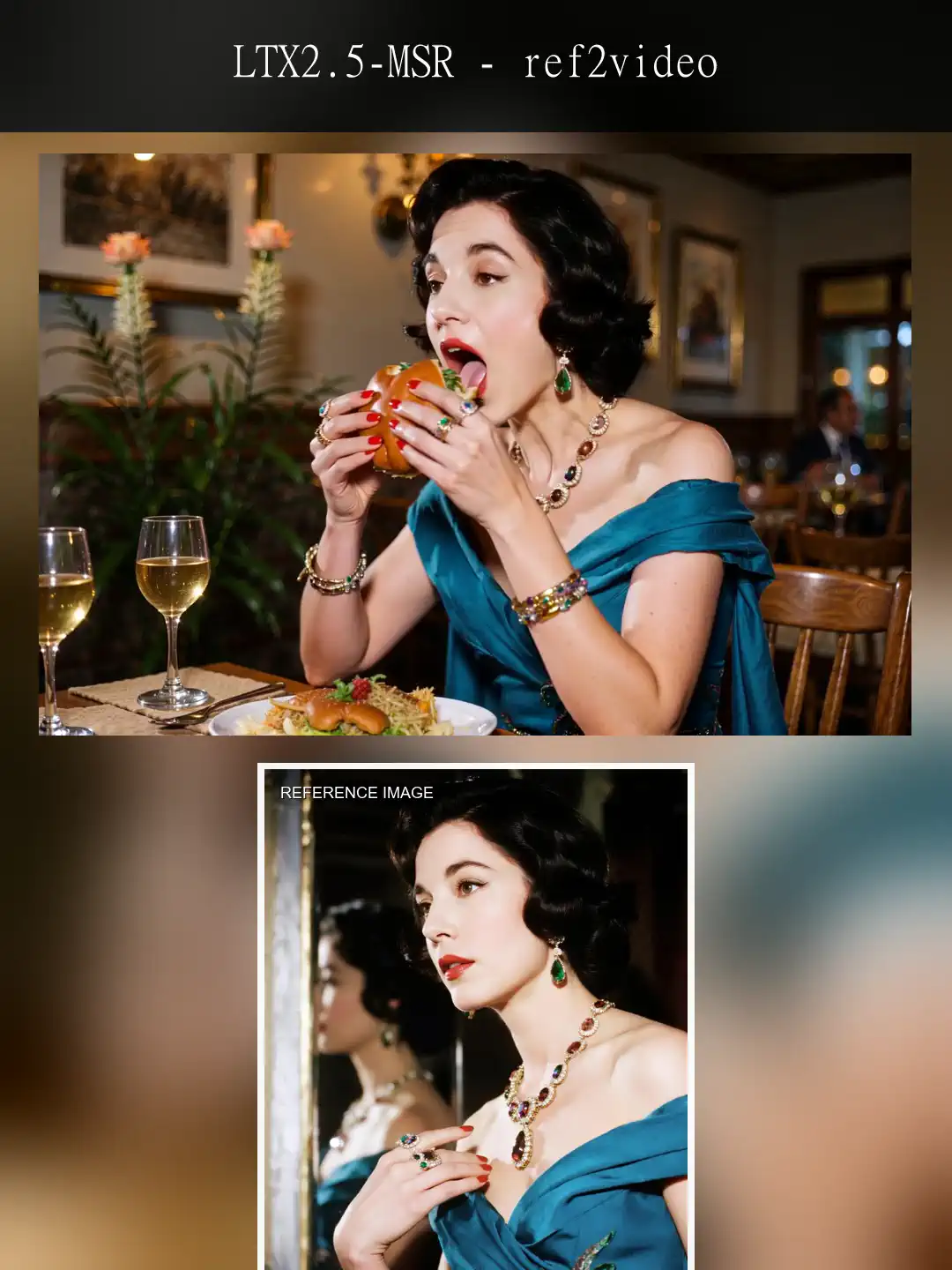
LTX-2.3 is an open-source audio-video foundation model released by Lightricks. Its core feature is not simply generating video alone or producing video first and adding audio later. Instead, it places both video and audio within a single generation framework, directly producing synchronized visuals and sound. Officially, it is described as a DiT-based audio-video foundation model, meaning a joint audio-video generation model built on Diffusion Transformer architecture.Compared with many traditional video generation approaches, the biggest difference of LTX-2.3 is its native audio-visual synchronization. If a prompt includes speaking, singing, ambient sound, or rhythmic motion, the model attempts to align lip movements, actions, and sound within a single generation process, rather than relying on post-processing to dub audio or correct lip sync afterward. This makes it especially valuable for dialogue videos, character singing, and short narrative scenes.
LTX2.3-Audio-video generation

5.0

LTX-2.3 is an open-source audio-video foundation model released by Lightricks. Its core feature is not simply generating video alone or producing video first and adding audio later. Instead, it places both video and audio within a single generation framework, directly producing synchronized visuals and sound. Officially, it is described as a DiT-based audio-video foundation model, meaning a joint audio-video generation model built on Diffusion Transformer architecture.Compared with many traditional video generation approaches, the biggest difference of LTX-2.3 is its native audio-visual synchronization. If a prompt includes speaking, singing, ambient sound, or rhythmic motion, the model attempts to align lip movements, actions, and sound within a single generation process, rather than relying on post-processing to dub audio or correct lip sync afterward. This makes it especially valuable for dialogue videos, character singing, and short narrative scenes.

avatar
avatar_frame
SeaArt Comfy Helper
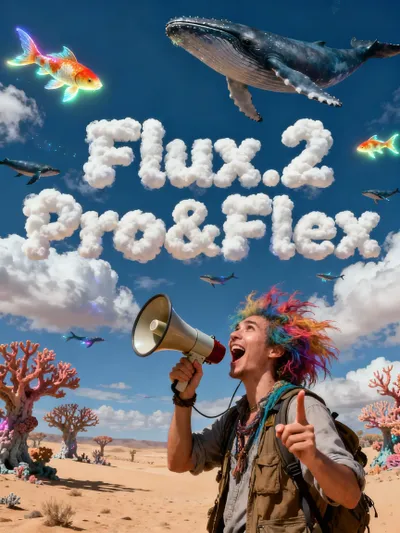
Flux.2 Pro&Flex

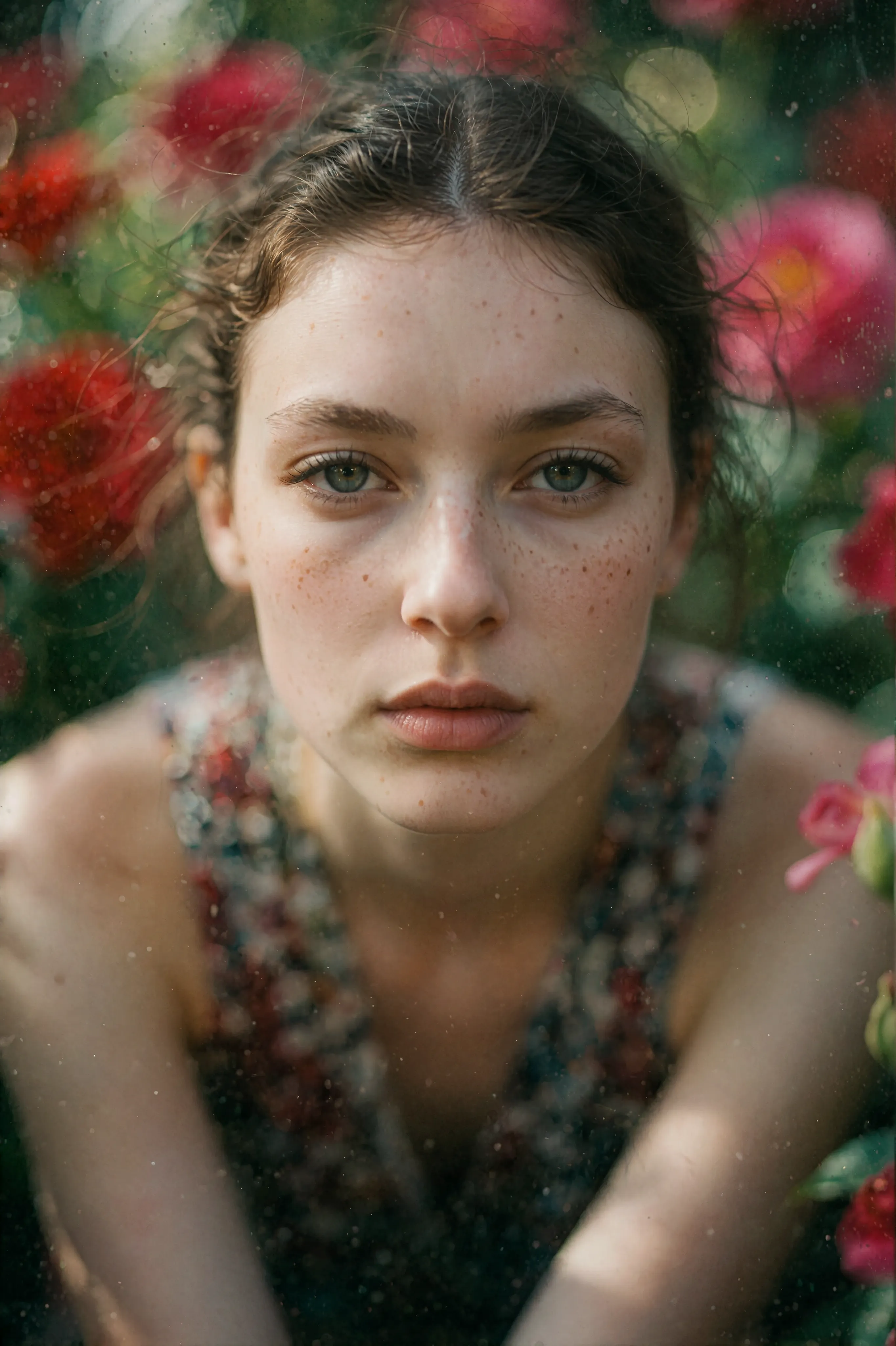
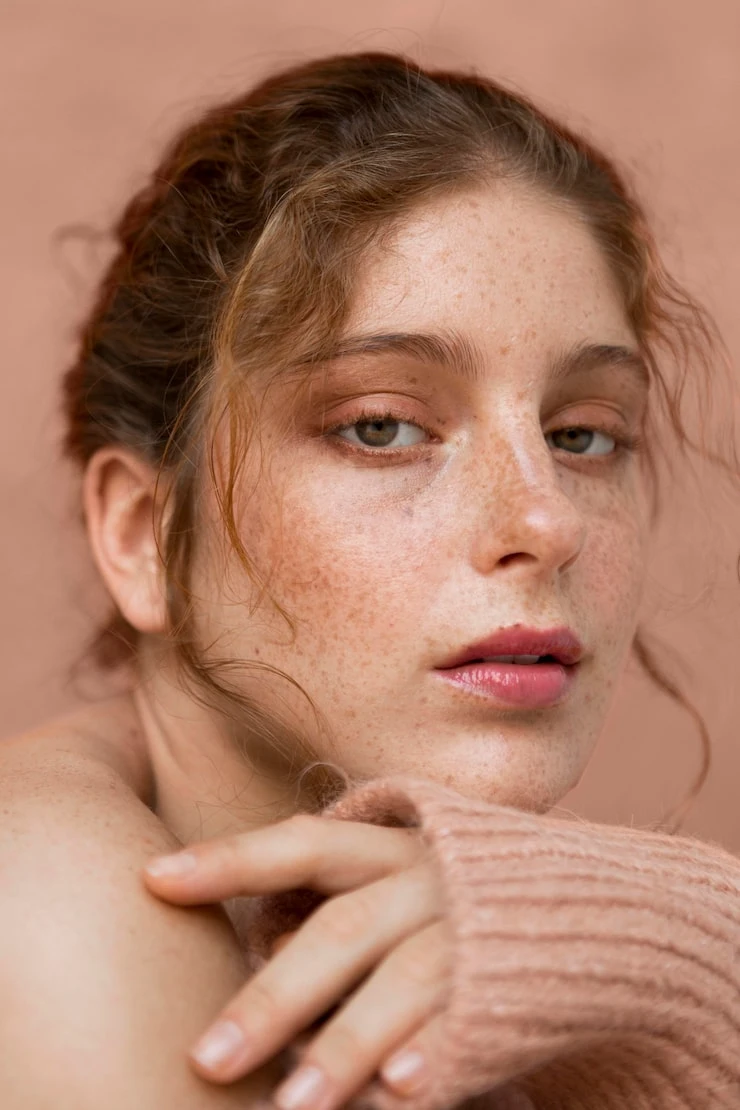
This workflow is providing access to two distinct versions: FLUX.2 Pro and FLUX.2 Flex. You can switch between them based on your specific needs for image precision and cost efficiency.🧩 Versions & Capabilities1. FLUX.2 ProCapabilities: Capable of generating high-quality images. Ideal for most standard creative tasks, style exploration, and rapid generation.Pricing (Credits):Text Only: 55 (≤1024px) / 70 (>1024px)Image Input: 80 (≤1024px) / 100 (>1024px)2. FLUX.2 FlexCapabilities: Compared to Pro, Flex excels in handling complex lighting, intricate textures, and adherence to long, complex prompts. It is the premier choice for ultimate image quality, commercial poster output, and high-precision editing tasks.Pricing (Credits):Text Only: 110 (≤1024px) / 140 (>1024px)Image Input: 220 (≤1024px) / 260 (>1024px)

Flux.2 Pro&Flex

4.9

This workflow is providing access to two distinct versions: FLUX.2 Pro and FLUX.2 Flex. You can switch between them based on your specific needs for image precision and cost efficiency.🧩 Versions & Capabilities1. FLUX.2 ProCapabilities: Capable of generating high-quality images. Ideal for most standard creative tasks, style exploration, and rapid generation.Pricing (Credits):Text Only: 55 (≤1024px) / 70 (>1024px)Image Input: 80 (≤1024px) / 100 (>1024px)2. FLUX.2 FlexCapabilities: Compared to Pro, Flex excels in handling complex lighting, intricate textures, and adherence to long, complex prompts. It is the premier choice for ultimate image quality, commercial poster output, and high-precision editing tasks.Pricing (Credits):Text Only: 110 (≤1024px) / 140 (>1024px)Image Input: 220 (≤1024px) / 260 (>1024px)
avatar
avatar_frame
SeaArt Comfy Helper

Wan Video

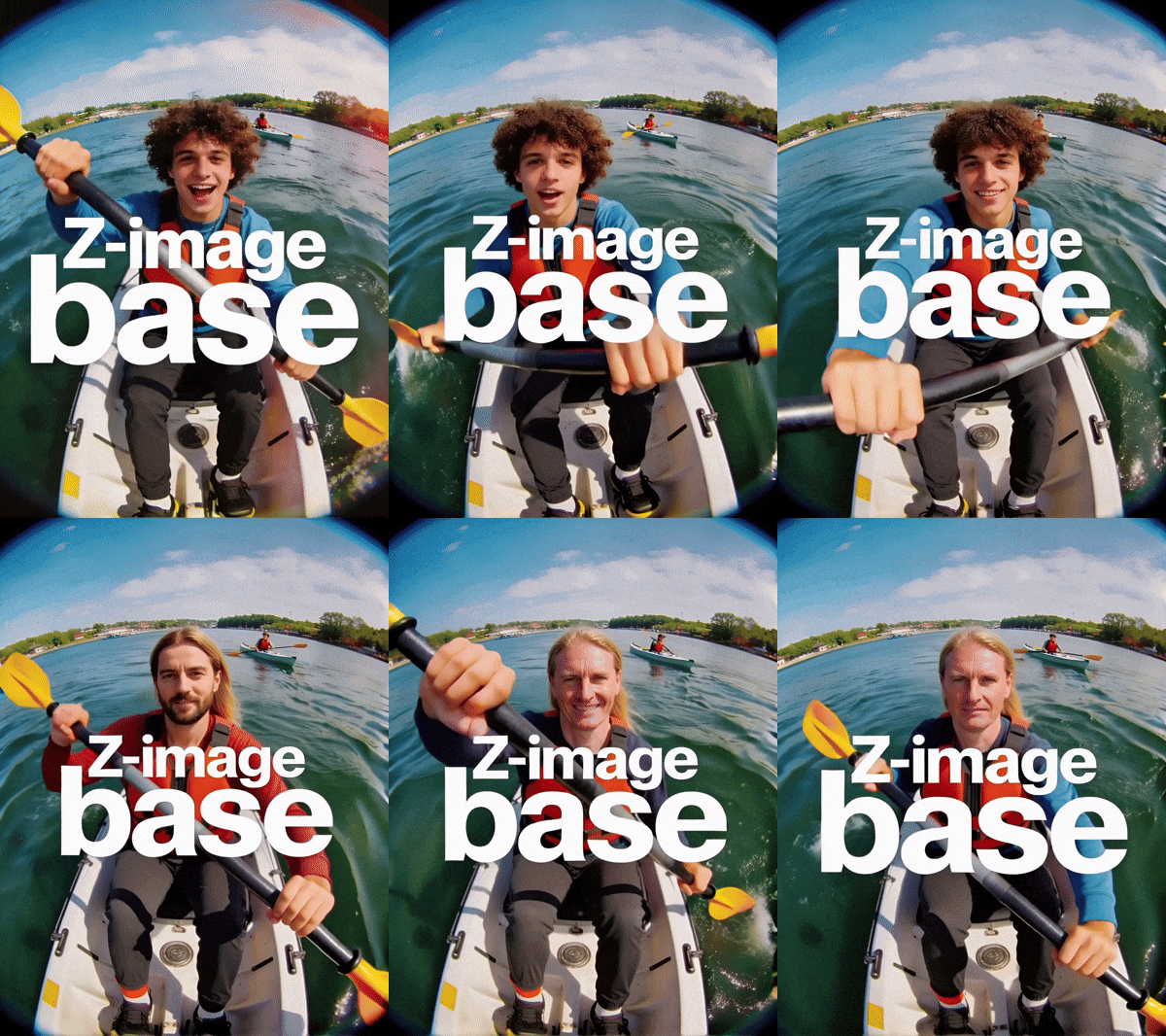
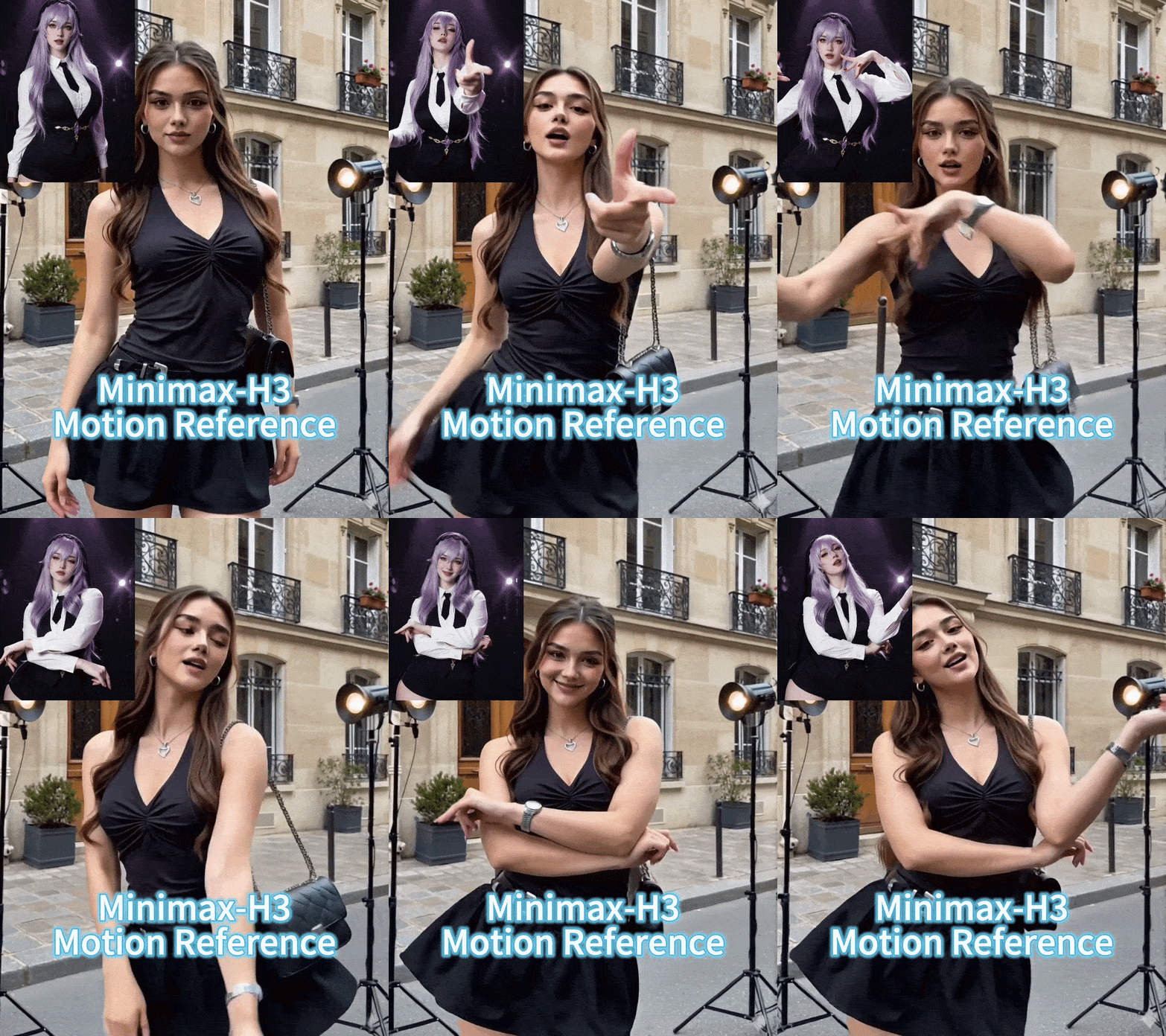
Wan2.2 VACE - Multimodal control-KJ

Continue the “unified editing/control” paradigm on the 2.2 backbone. The 2.2 backbone adopts a Mixture‑of‑Experts (MoE) design—high‑noise and low‑noise experts operating at different denoising stages—to improve quality and detail while keeping inference costs manageable. A representative controllable variant is Wan2.2‑VACE‑Fun‑A14B, which supports multi‑modal control conditions (Canny, Depth, OpenPose, MLSD, Trajectory, etc.). A typical workflow is: provide a reference image (to preserve identity/appearance) plus a driving video or its parsed control signals (e.g., pose sequence, trajectory, time‑varying depth/edges) to generate a video driven by that reference image. The VACE/Fun family provides these temporal control interfaces and the unified task support.

Wan2.2 VACE - Multimodal control-KJ

4.7

Continue the “unified editing/control” paradigm on the 2.2 backbone. The 2.2 backbone adopts a Mixture‑of‑Experts (MoE) design—high‑noise and low‑noise experts operating at different denoising stages—to improve quality and detail while keeping inference costs manageable. A representative controllable variant is Wan2.2‑VACE‑Fun‑A14B, which supports multi‑modal control conditions (Canny, Depth, OpenPose, MLSD, Trajectory, etc.). A typical workflow is: provide a reference image (to preserve identity/appearance) plus a driving video or its parsed control signals (e.g., pose sequence, trajectory, time‑varying depth/edges) to generate a video driven by that reference image. The VACE/Fun family provides these temporal control interfaces and the unified task support.
avatar
avatar_frame
SeaArt Comfy Helper
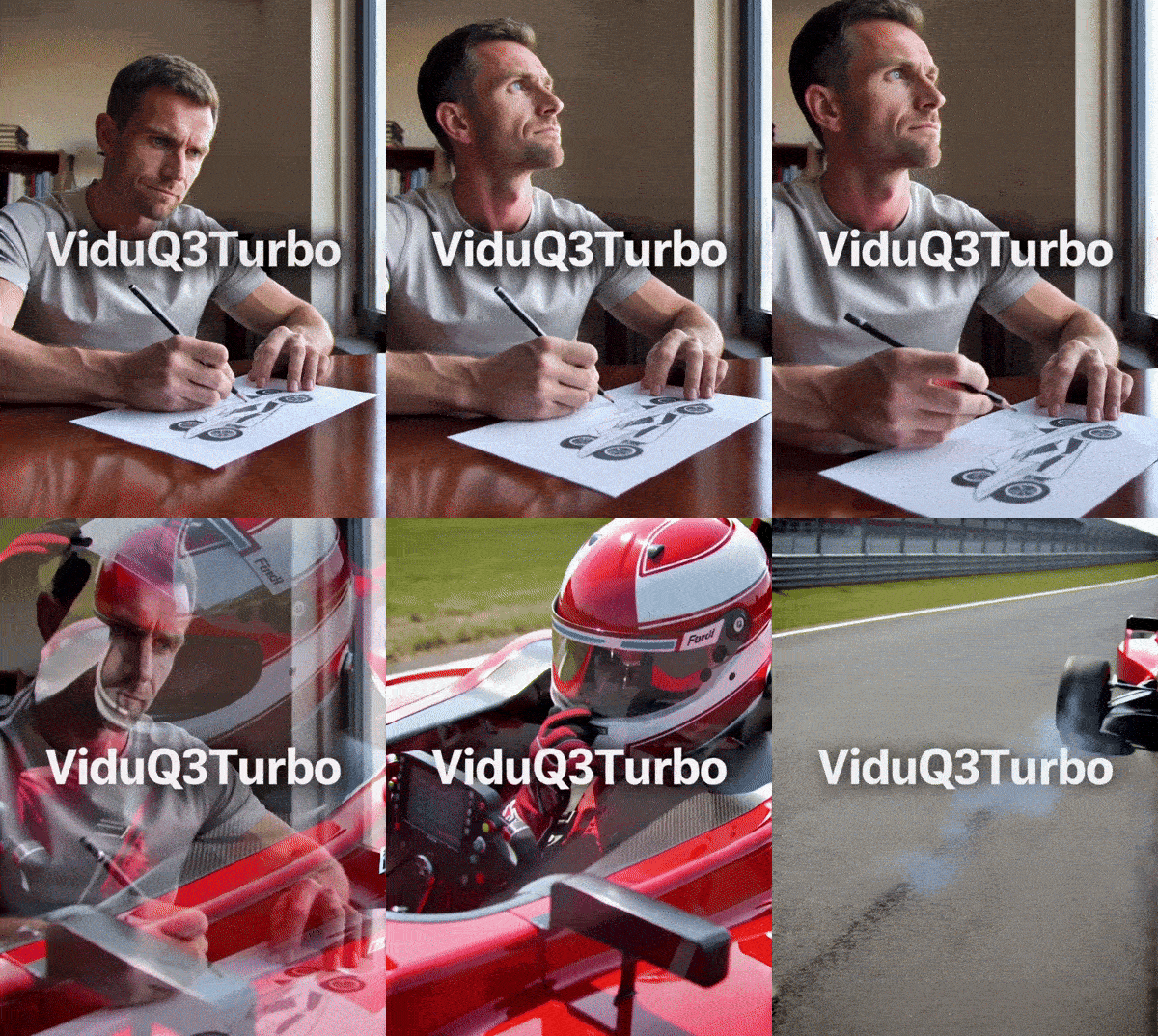
Wan2.2‑Fun-Inp-KJ

Wan2.2‑Fun‑InP is part of the Wan2.2‑Fun series. It supports conditioning on a start frame and an end frame to estimate the in‑between transition and produce temporally consistent video results for controllable image‑to‑video applications.What it addresses:Traditional image‑to‑video workflows typically extend motion from a single starting image. By adding an optional end keyframe, Fun‑InP helps the motion, composition, and overall content progress toward a specified target, making transitions easier to control and the sequence more coherent.Inputs: start‑frame image, end‑frame image (optional text prompt / control signals).Output: a video clip made up of interpolated middle frames, with the first and last frames visually consistent with the provided keyframes.

Wan2.2‑Fun-Inp-KJ

4.5

Wan2.2‑Fun‑InP is part of the Wan2.2‑Fun series. It supports conditioning on a start frame and an end frame to estimate the in‑between transition and produce temporally consistent video results for controllable image‑to‑video applications.What it addresses:Traditional image‑to‑video workflows typically extend motion from a single starting image. By adding an optional end keyframe, Fun‑InP helps the motion, composition, and overall content progress toward a specified target, making transitions easier to control and the sequence more coherent.Inputs: start‑frame image, end‑frame image (optional text prompt / control signals).Output: a video clip made up of interpolated middle frames, with the first and last frames visually consistent with the provided keyframes.
avatar
avatar_frame
SeaArt Comfy Helper
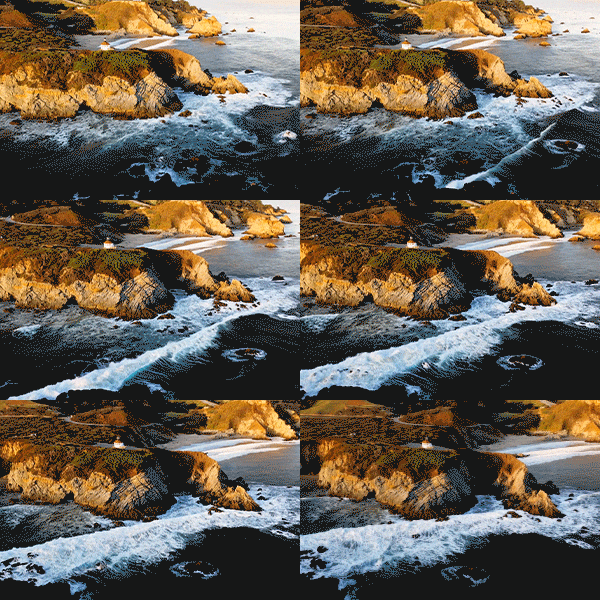
Wan2.1 Minimax-Remover - Video erase -KJ

Core Focus: Video-level object removal. Given a sequence of video frames and a corresponding mask, it seamlessly removes the masked object and fills in the background while maintaining temporal consistency, minimizing artifacts or remnants.Method Highlights:Minimum-Maximum Optimization: Tames bad noise during training and inference, improving the model's robustness to masked regions and reducing the probability of object regeneration.Two-Stage Architecture: First, a simplified DiT (Diffusion Transformer) structure is used to learn the removal capability; then, a version with fewer sampling steps and faster inference is obtained through "CFG de-distillation."Efficiency Features: Extremely low inference steps (approximately 6 steps in the official example), and does not rely on CFG, resulting in high speed and low resource consumption, suitable for long videos/batch processing. References

Wan2.1 Minimax-Remover - Video erase -KJ

3.0

Core Focus: Video-level object removal. Given a sequence of video frames and a corresponding mask, it seamlessly removes the masked object and fills in the background while maintaining temporal consistency, minimizing artifacts or remnants.Method Highlights:Minimum-Maximum Optimization: Tames bad noise during training and inference, improving the model's robustness to masked regions and reducing the probability of object regeneration.Two-Stage Architecture: First, a simplified DiT (Diffusion Transformer) structure is used to learn the removal capability; then, a version with fewer sampling steps and faster inference is obtained through "CFG de-distillation."Efficiency Features: Extremely low inference steps (approximately 6 steps in the official example), and does not rely on CFG, resulting in high speed and low resource consumption, suitable for long videos/batch processing. References
avatar
avatar_frame
SeaArt Comfy Helper
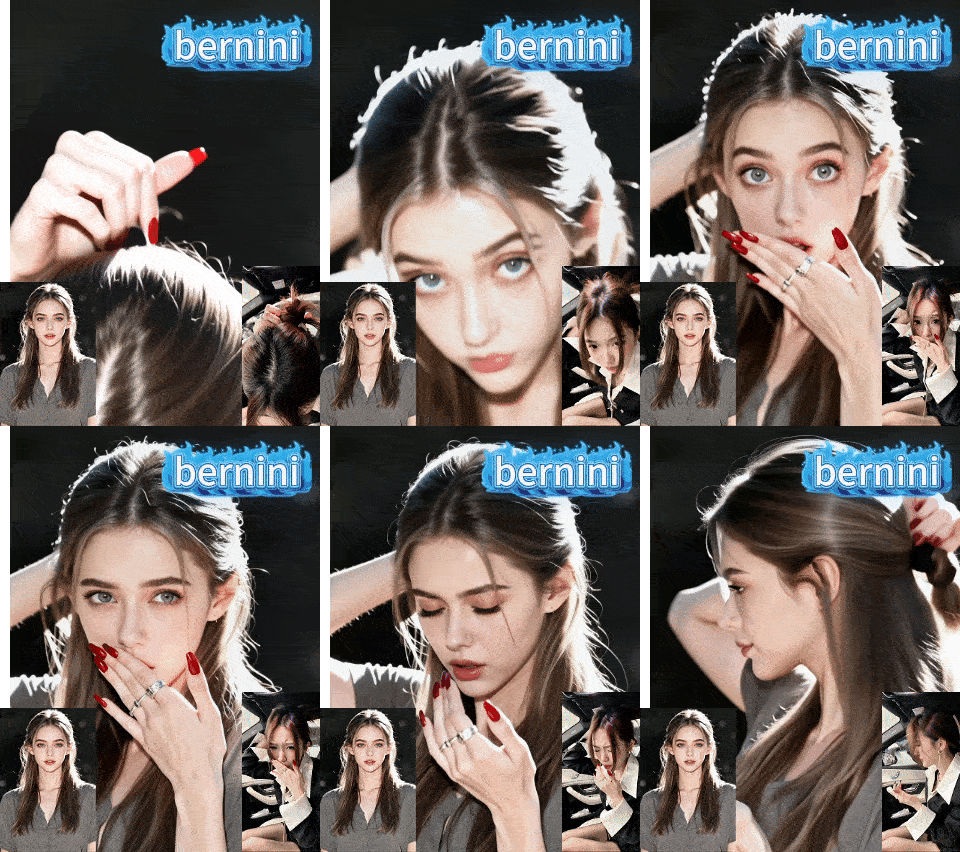
LongCat-Video extension

🐱 LongCat-Video: Infinite Video Extension Workflow【One-Sentence Intro】Break the duration limit of AI video generation 🚀What Can It Do?This is an advanced workflow based on the **Wan2.1** model, designed to solve the core pain points of AI videos being "too short" and "disjointed when extended."♾️ Infinite Extension Just provide an image or a short video clip, and the workflow will automatically generate subsequent frames like a "relay race," theoretically allowing for infinite generation.Seamless "Invisible" Stitching It automatically trims the awkward beginnings of extended segments, making the transition between clips as smooth as silk, with absolutely no visible stitching marks.【Use Cases】Creating ultra-long looping landscape videos.Producing coherent narrative shorts, no longer limited by the 5-second barrier.

LongCat-Video extension

4.3

🐱 LongCat-Video: Infinite Video Extension Workflow【One-Sentence Intro】Break the duration limit of AI video generation 🚀What Can It Do?This is an advanced workflow based on the **Wan2.1** model, designed to solve the core pain points of AI videos being "too short" and "disjointed when extended."♾️ Infinite Extension Just provide an image or a short video clip, and the workflow will automatically generate subsequent frames like a "relay race," theoretically allowing for infinite generation.Seamless "Invisible" Stitching It automatically trims the awkward beginnings of extended segments, making the transition between clips as smooth as silk, with absolutely no visible stitching marks.【Use Cases】Creating ultra-long looping landscape videos.Producing coherent narrative shorts, no longer limited by the 5-second barrier.
avatar
avatar_frame
SeaArt Comfy Helper

Nueva Selección

卓越总部工作流程

This workflow aims to create high-quality images without being a turtle slow. It consists of a USDU acting as a refiner and a chain of detailers. The result is very good quality images with an execution time of less than one minute and thirty seconds. Times range from 1:10 to 1:30 minutes.It is optimized to work with the recommended latent resolutions for Illustrious-XL, which are close to 832x1216. These resolutions avoid long, deformed bodies, elongated faces, broken columns, etc. Don't worry, the workflow refinement leaves the images with tremendous quality.I left a Preview Image from the initial Ksmapler so you can see if your Checkpoint, LoRA, and Prompt are causing problems (if your problem comes from here, it's a problem with your own model configuration, LoRA, and prompt; don't blame the workflow!).If you have questions, suggestions, or want to point out errors, feel free to comment. Oh, and don't forget to post your artwork! :3

卓越总部工作流程

5.0

This workflow aims to create high-quality images without being a turtle slow. It consists of a USDU acting as a refiner and a chain of detailers. The result is very good quality images with an execution time of less than one minute and thirty seconds. Times range from 1:10 to 1:30 minutes.It is optimized to work with the recommended latent resolutions for Illustrious-XL, which are close to 832x1216. These resolutions avoid long, deformed bodies, elongated faces, broken columns, etc. Don't worry, the workflow refinement leaves the images with tremendous quality.I left a Preview Image from the initial Ksmapler so you can see if your Checkpoint, LoRA, and Prompt are causing problems (if your problem comes from here, it's a problem with your own model configuration, LoRA, and prompt; don't blame the workflow!).If you have questions, suggestions, or want to point out errors, feel free to comment. Oh, and don't forget to post your artwork! :3
avatar
avatar_frame
Pls win Pls
Evento de Desafío
Básico
Generación de video
Generación de audio
Generación 3D
FLUX
Estilo
Diseño
Fotografía
Procesamiento de imágenes
Juegos creativos
Filtro de nodos
Filtro

Bienvenido al Workflow de SeaArt AI

Simplifica tu proceso creativo con los flujos de trabajo generadores de arte AI de SeaArt, diseñados para satisfacer las diversas necesidades de artistas, diseñadores y creativos. Desde imágenes AI hasta videos AI, SeaArt AI ofrece todo lo que necesitas para dar vida a tu visión artística.

¿Por qué usar el ComfyUI Workflow en SeaArt AI?

Interfaz simple

SeaArt AI proporciona una interfaz intuitiva que hace que configurar los flujos de trabajo sea muy fácil. Todos los flujos de trabajo están construidos para todos, incluso si no tienes experiencia en codificación.
Flujos de trabajo personalizables

Diseña tu flujo de trabajo a tu manera. Desde entrenamiento avanzado LoRA hasta la compleja generación de texto-a-imagen, cada paso es ajustable para satisfacer tus necesidades.
Alta eficiencia

SeaArt optimiza los procesos de creación de arte AI. Disfruta de tiempos de renderizado más rápidos y menos obstáculos técnicos. Produce visuales impresionantes rápidamente.

Múltiples flujos de trabajo en SeaArt AI

Miles de flujos de trabajo para la creación de arte AI

Desbloquea tu visión artística con SeaArt Workflow. Accede a miles de flujos de trabajo preconfigurados para generar arte AI de manera sencilla en formatos como texto-a-imagen, imagen-a-imagen e imagen-a-video. Estos flujos de trabajo se integran con poderosos modelos AI como Flux, SD 3.5 y otras opciones populares, incluido ControlNet, dándote la flexibilidad de crear visuales impresionantes que se ajusten a tus preferencias.

Flujos de trabajo personalizables en SeaArt AI

Control total con flujos de trabajo personalizables

Con SeaArt Workflow, tienes control total sobre tu proceso de generación. Ofrecemos potentes opciones de personalización que te permiten adaptar los flujos de trabajo a tus necesidades específicas. Ajusta los parámetros, cambia los modelos AI y ajusta la configuración para asegurarte de que el resultado final cumpla con tu visión.

Preguntas frecuentes

collapse

¿Qué es el ComfyUI Workflow?

El Workflow de SeaArt AI es una herramienta innovadora que va más allá de los simples prompts de texto. A diferencia de los generadores tradicionales de arte AI, SeaArt ofrece un sistema de flujo de trabajo visual, donde puedes construir flujos de trabajo personalizados para controlar el proceso de generación de imágenes y videos con una precisión granular.

expand

¿Qué tipos de arte AI puedo generar con los flujos de trabajo?

Estos flujos de trabajo te permiten crear fácilmente una amplia gama de arte AI, incluyendo retratos realistas, paisajes fantásticos, personajes de anime y creaciones abstractas. Puedes crear sin esfuerzo texto-a-imagen, imagen-a-imagen e imagen-a-video, así como aplicar transferencias de estilo e incluso generar modelos 3D.

expand

¿Es adecuado el ComfyUI Workflow para principiantes?

¡Sí! Con nuestra interfaz fácil de usar de arrastrar y soltar y las vistas previas en tiempo real, el Workflow de SeaArt es accesible tanto para principiantes como para usuarios avanzados, haciendo que la creación de arte AI sea simple.

expand

¿Puedo personalizar mi flujo de trabajo?

Sí. SeaArt AI ofrece varias configuraciones personalizables que te permiten ajustar tu flujo de trabajo según las necesidades específicas de tu proyecto.